"Confusion Is Profitable." What the Wellness Industry Did to Cortisol


"Confusion Is Profitable." What the Wellness Industry Did to Cortisol
There's something oddly bonding about having a common enemy, and cortisol has become the wellness world's favourite villain. When we don't understand something, we are far more likely to fear it. And fear, particularly when it comes to our health, makes us vulnerable. The wellness industry knows this. Confusion is profitable. The moment a hormone, a food group or a biological process becomes something to dread, there is money to be made in the remedy. For years, we've been told cortisol is something we need to demonise, suppress and fix. The science tells a very different story.
Without our hormones, we wouldn't be here, yet as women, we've been conditioned to think of them in a negative light. And few hormones have been so thoroughly cast as the villain as cortisol; our modern day scapegoat for oscillating moods, fluctuating waistlines and ruminating worries. Now cortisol does drive all of these symptoms, however it's simply the messenger following orders from the data we feed it, alongside genetics (the fundamental role of all hormones is that they are chemical messengers). Instead of blaming the pressures we put upon ourselves, our diets and modern living, we've taken to blaming a singular hormone, which isn't really fair. Or scientifically accurate. The issue is not with cortisol itself, it's the world we are living in and chronic stress.
Give a hormone a tarnished reputation and suddenly it needs lowering, detoxing or balancing. The wellness industry is waiting in the wings with overpriced supplements and gadgets to fix it. We've been willing to believe the narrative because we don't have the energy or inclination to question it. We're tired, we're stressed and quite frankly, all game for a quick fix. Cortisol balancing gummies, anyone?
Somewhere between cortisol face, cortisol belly and cortisol lowering cocktails, we've turned a hormone designed to keep us alive into public enemy number one.
But what if I told you the wellness industry got cortisol wrong?
Cortisol has been handed the rather reductive job title of our "stress hormone", but it's so much more than that. I prefer to call it our survival hormone. Produced by the adrenal glands as part of our hypothalamic pituitary adrenal (HPA) axis, cortisol helps us adapt to demand. It's the hormonal heartbeat to our circadian rhythm, it influences immune activity and inflammation, plays a role in blood pressure and cardiovascular function, and communicates with systems involved in mood, reproduction and metabolism. In fact, it might just save your life in a tricky situation.
It wakes you up in the morning. Cortisol is motivating. It helps you focus and mobilise the energy required to actually get things done. You can use it to your advantage. Most tissues in the body are responsive to glucocorticoid signalling, which gives you an idea of just how far reaching cortisol's influence is.
Put simply, we need cortisol. So where did it all go wrong?
As a registered nutritionist and hormone specialist, I have a decade supporting women with their health. I've studied hormones extensively and written two books. I'm on the front line, and I can see how the pressure we put upon ourselves is making us buckle. This overload is pushing cortisol to its limit. We're seeing chronically elevated levels, dysregulated daily cortisol patterns and burnout. Cortisol is essential for life but you can have too much, or too little, of a good thing.
I also know this because I have lived it. I've tasted the wrath of a cortisol spiral. Tired but wired, puffy, bloated, anxious and inflamed, punctuated by my first endometriosis flare in ten years, with surgery required bang in the middle of my book deadlines. Ironically titled Everything I Know About Cortisol. One has to laugh.
I am a people pleaser. A perfectionist. I'm not particularly good at asking for help. To the onlooker, I didn't look stressed. I looked productive. I was working, mothering, writing books, supporting clients in my global private practice and saying yes to exciting opportunities. I was functioning brilliantly, but that was part of the problem. I was trying to be it all. I dropped the ball on boundary setting and the nutritional and lifestyle toolkit I know and love so well.
Is the wellness industry taking advantage of the false promise that we could be it all? Women have broken barriers, built businesses, entered boardrooms. But did the domestic load move at the same speed? Did the invisible labour disappear? We might have smashed the glass ceiling but we also have to clean up the glass, do school pick up and fold the laundry.
The problem is not cortisol itself. Problems can arise when the systems regulating our stress response and cortisol rhythm are repeatedly challenged by chronic demand. Your brain is constantly taking in information about your internal and external environment. Lack of sleep is information. Under eating is information. Too much ultra processed food and alcohol is information. Emotional pressure is information. Relentless deadlines are information. Saying yes to everything is information. Your body can read all of this as a threat, in the same way it would read a bear chasing you down the road as a threat. Stress is very black and white to the body.
Cortisol isn't plotting against you, it's just trying to keep you alive. You're simply adapting to the data it receives and where there is chronic stress your cortisol levels can become dysregulated. And this is the interesting thing about nutrition and lifestyle: it works the other way round too. If you strategically change the information you feed your body, you can positively change the narrative.
Now, I wasn't lying on the floor unable to function. I was exhausted, less resilient and more reactive. My sleep changed. I felt less like myself but being an expert in this field I was able to recognise it and change the script. One of the greatest lessons I want you to take away from this is that you are the storyteller. Everything you tell your body, through diet, movement, action, sleep and boundaries, can dictate how it functions. Your job is to remind it that it's safe.
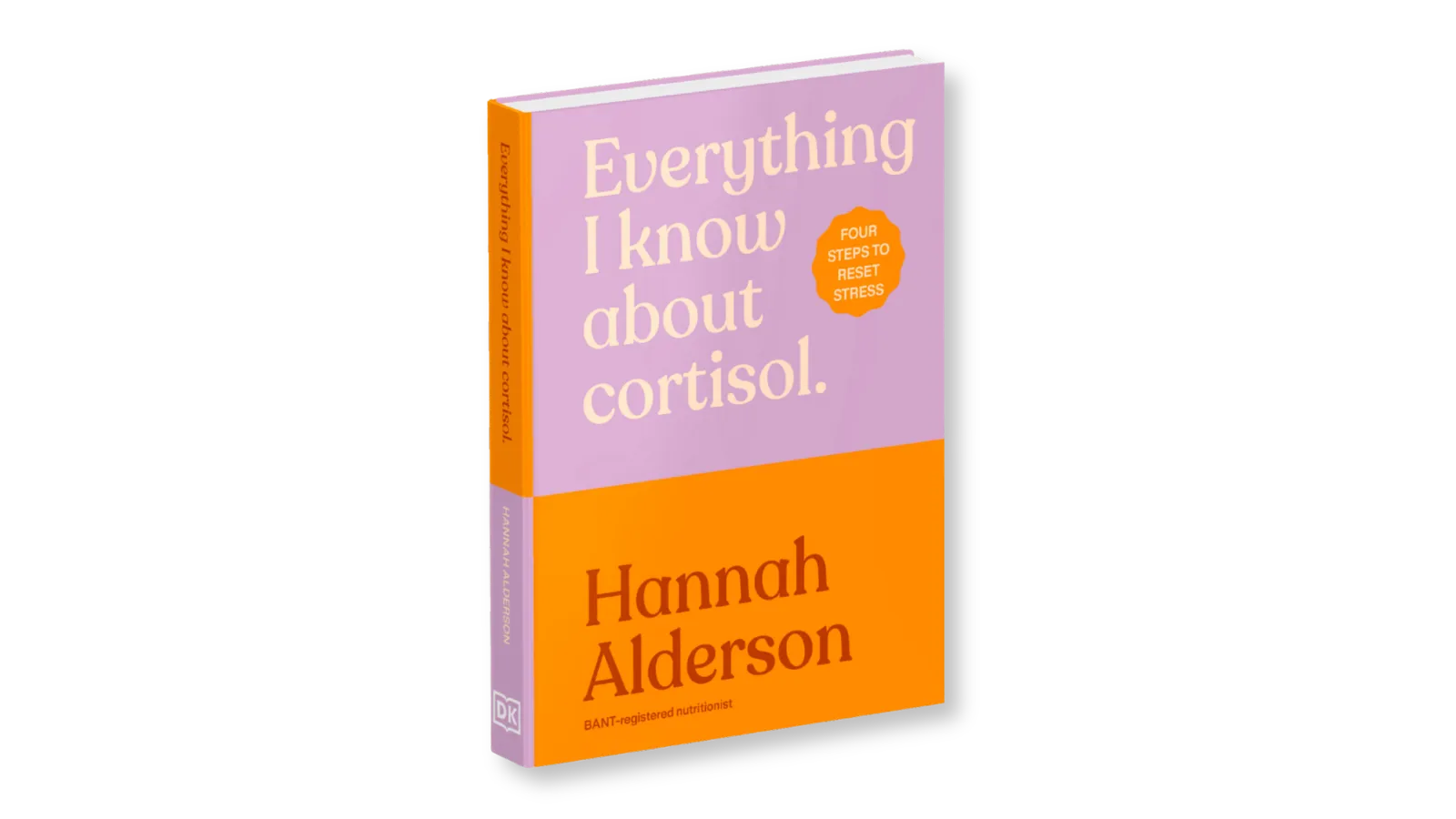
The goal is not to flatten or simply lower cortisol. You can't eradicate life's stress either, but you can support how your body handles the curve balls. The key is to support its daily diurnal rhythm. At the core of my new book Everything I Know About Cortisol is the four-step stress reset, a practical, nutritional and lifestyle programme designed to restore a healthy daily cortisol rhythm for better energy, mood and hormonal balance.
You do not need to quit your job, move to Bali, give up coffee or take 17 supplements before breakfast. You do not need another impossible wellness routine. The steps are beautifully simple when you know how to slip them into your world, not the other way around.
Cortisol is not the enemy. In the right balance, it can be one of your greatest allies.
Everything I Know About Cortisol by Hannah Alderson is available to pre-order now.
Advertisement
What to read next