theALLBRIGHT
Advertisement

Are You Doing to Your Money What Steven Bartlett Does With Wine?

By Krystle McGilvery
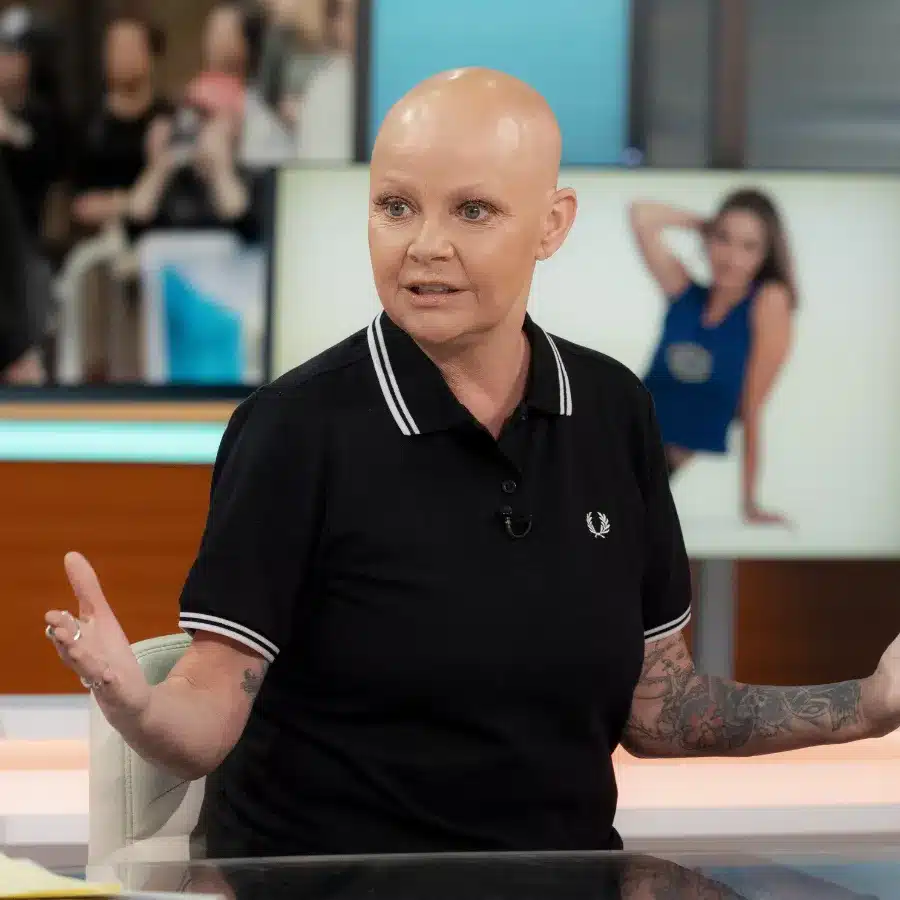
Steven Bartlett in the Den. He optimises everything. Krystle McGilvery has some questions about that
Photo by BBC/Simon Pantling
By Krystle McGilvery

Are You Doing to Your Money What Steven Bartlett Does With Wine?

We’re confusing optimisation with progress

Chartered Accountant and behavioural finance specialist Krystle McGilvery knows more about money than most. Yet she still asks herself if she’s behind. Here she unpicks financial wellness, the Steven Bartlett effect and why the goalposts keep moving however much you achieve.

Join the women who read theALLBRIGHT Editor’s Letter every week. Sharp, honest and always worth opening.

I'm a money expert, a Chartered Accountant and a behavioural finance specialist, and I spend a lot of time teaching others about money. Yet I still find myself calculating future scenarios, achieving one goal and seeking another soon after, and wondering "Am I behind?" 

I calculate the impact of increasing my mortgage payments, revise my investment allocations and look at what more I could do with more money. Objectively, I know I am doing well, yet my brain still searches for the next opportunity. 

If someone who understands money professionally can turn financial wellbeing into another performance metric, perhaps it confirms that knowledge alone was never the whole answer. 

Perhaps this is why Steven Bartlett sparked an online debate after revealing that drinking a couple of glasses of wine "ruined three days of his life". This kicked off a major backlash and cultural discussion about the extremes of hyper-optimisation and wellness tracking. But was the reaction so big because such a large part of our lives is overshadowed by wellness optimisation and feeling guilty or ashamed when we are not meeting our metric targets? 

“Does hyper-optimisation actually get worse the more successful you become, because the goalposts just move further?”

It raises a question worth sitting with: does hyper-optimisation actually get worse the more successful you become, because the goalposts just move further? It seems Bartlett has become increasingly fixated on tracking and data as his platform and successes have grown. Which tells us something important about the nature of the trap itself. 

Measurement changes our relationship with the world. We go from "I enjoyed that walk" to "Only 6,000 steps? I need another 4,000". With money, you stop thinking "That dinner with friends was wonderful" and instead think "That was £70 I could have invested". The experience becomes a transaction and evidence of whether we are succeeding. That £70 meal is no longer just a meal. It is a bad habit and the reason you cannot buy a home. 

The wellness world promised better health, calm and longevity, but somewhere along the way it moved from "How does my body feel?" to "What does my tracker say, and have I reached my target?" 

The Bartlett debate fascinated me because while everyone was talking about wellness, I could not stop comparing it to financial wellness. After all, we have done the same thing here. Not a day goes by that we are not tracking our steps, sleep scores and calories alongside our emergency funds, investment growth rates, spend categories and retirement calculators. We are not asking "How financially safe do I feel?" We are focused on whether we are following the latest framework, rule or recommendation correctly. 

“More information, more tracking and more optimisation were not automatically creating more peace, but more comparison, self-criticism and the feeling that there was always something else to improve.”

I have spent my career helping people feel better with money through private coaching and group training. Yet I noticed that even when people were doing everything right financially, they were not necessarily feeling any better. More information, more tracking and more optimisation were not automatically creating more peace. They were often creating more comparison, self-criticism and the feeling that there was always something else to improve. 

Women were historically excluded from financial conversations. For generations, we fought for access, independence and a seat at the table. But the message has evolved. Taking control of our money has become constantly improving our money. We are no longer just encouraged to earn, save and invest. We are encouraged to start earlier, build wealth faster, optimise every penny and make every financial decision the right one. The question is no longer simply "Am I financially well?" but "Am I doing enough?" 

Take my own life. I put off travelling with friends to reach financial targets and missed out on important life events along the way. I spent years focused on financial goals, built a career in money, climbed the career ladder, saved, bought my first property at 28, and learned about investing. These were milestones I genuinely wanted, but they did not automatically create the lasting sense of security I expected. Instead, the financial targets simply moved. 

A better pension. A higher income. Another investment. 

“Money was supposed to be the tool that facilitated the life we desired. Somewhere along the way, we made ourselves the project.”

I thought there would be a moment when my brain said "You made it". It never came. Instead I became the person obsessed with doing better, having more and missing out on the joys of everyday life. I looked at everyone else through the same lens too, casting a judgmental eye on others' choices, measuring their decisions against my own framework. I got stuck in a loop. And loops, it turns out, are not the same thing as progress. 

So when does being financially responsible turn into feeling like you are never finished? 

In behavioural psychology, we talk about hedonic adaptation, where today's achievement becomes tomorrow's baseline. It explains why the next financial milestone can feel so important before we reach it, yet so normal once we arrive. 

If we go back to where the focus on wellness started, making changes to live a better life, more calmness, longevity and ease, maybe financial wellness can align with that original intention. 

Instead of "How can I optimise every pound?", maybe the question is "What kind of life is my money allowing me to live?" Or, "Why don't we focus more on joy, relationships, creativity, rest and choice?" 

Money was supposed to be the tool that facilitated the life we desired. Somewhere along the way, we made ourselves the project. 

At theALLBRIGHT's Live Well summit on 25 September at Old Sessions House, London, financial health is a key part of the conversation, because the way we think about money and the way we think about wellness have more in common than we ever admitted. Tickets available now. 

Advertisement
Advertisement
theALLBRIGHT

Get theALLBRIGHT edit – a curated selection of ideas, stories and opportunities shaping modern work and life.

Get the edit
We occasionally partner with brands we think you'll genuinely find useful or interesting. Would you be happy to hear from them too?