theALLBRIGHT
Advertisement
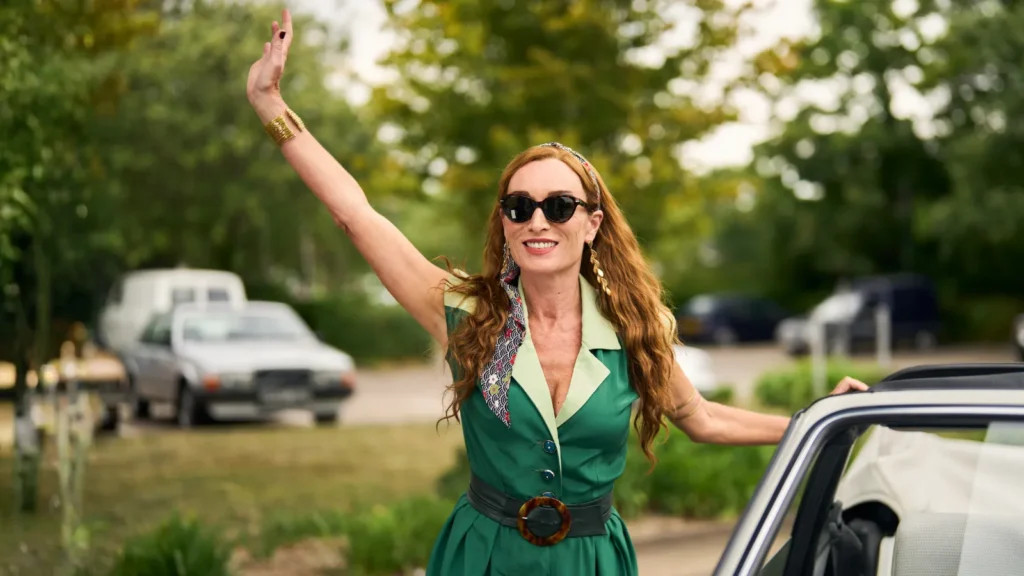
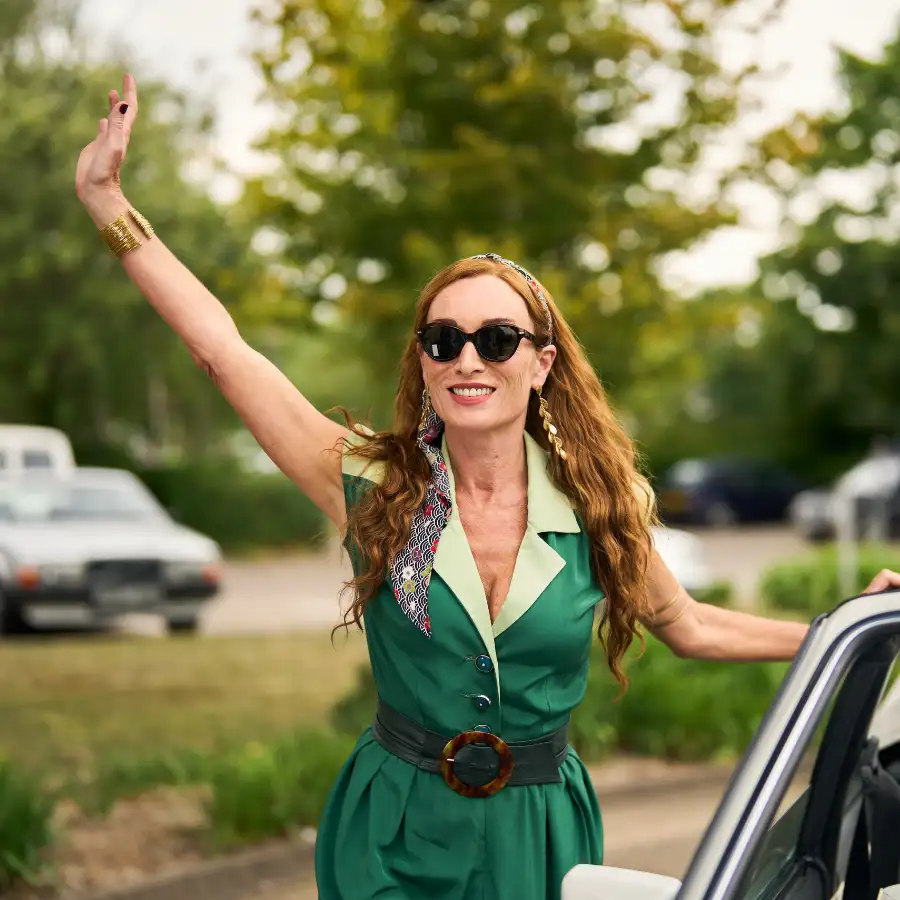
Maud in Rivals: brilliant, ambitious, absolutely certain she belongs in the most important rooms. The 1980s costumes are vintage, her audacity is entirely current.
Photo by Robert Viglasky Photography
By Kat Brown

Why Rivals Feels Less Like Watching Television and More Like Being Seen

Brilliant women, impossible systems, vintage outfits

Kat Brown is resident Jilly expert on the Rivals podcast and has spent years immersed in Jilly Cooper’s world. Here she makes the case that you do not need to have watched a single episode to understand why it has captured quite so many women, quite so completely.

Join the women who read theALLBRIGHT Editor’s Letter every week. Sharp, honest and always worth opening.

Ironically, perhaps the least feminist thing about this season of Rivals on Disney+ is the writer Laura Wade’s utterly gripping – and appallingly unsisterly – cliffhanger for its midseason finale.

No spoilers here, but safe to say that my WhatsApp groups and Instagram DMs erupted in a Mexican wave of women going “WHAT?!” as they finished watching it. It derailed the weekend of every hooked Rivals viewer I know. Productivity levels in Britain among the Disney+ viewing classes have arguably never been lower, or more replaced by intensive sulking. How could they do that!

But wow, what a masterstroke. Wade, the playwright behind Posh and 2019’s Best Comedy Olivier winner, Home, I’m Darling, along with her fellow executive producer (and Jilly Cooper’s agent) Felicity Blunt, has kept the structure of Cooper’s book and characters while developing them brilliantly for modern TV. Watching it rather reflects the Goodwood Revival mantra of “vintage fashion, not vintage values” in that we see plenty of how women (and men) are repressed by the time they’re in, but characters are also allowed to really hammer home their talents and desires.

Rather than purely playing up the sexism we all know about (and can probably all rather grimly remember from our own careers), Rivals shows us how women navigate the worlds they find themselves in to get to the top – whatever that means to them – and make the most of it.

Think one of the show’s breakout characters, Shelley Makepiece (Emma Shipp), daughter of Rupert’s cleaner, who talks her way into every job going, including as make-up artist on Declan O’Hara’s Irish documentary. Taggie O’Hara (Bella Maclean), the dyslexic underdog of her family, whose heavenly cooking keeps the bills paid at home.

Declan’s actress wife, Maud (brilliantly, appallingly played by Victoria Smurfitt), is a terrible parent, but seizing the opportunity to get back to work at any cost is rewarded, after lowly roles with star-making ones – at the cost of working with David Tennant’s serpentine Tony Baddingham.

In the book, the brilliant TV producer Cameron Cook (Nafessa Williams) was your archetypal genius bitch, as unlikeable and unsympathetic as she was ravishing. That wouldn’t wash on TV, not least as Cameron is one of the few Black characters – a much-needed update, but updating her character, too, lets us see her being shit hot at her job and personal life rather than playing into the usual tropes of “aggression” or “strong female lead.”

On the downside, you have ghastly tabloid journalist Beattie Johnson (who’d probably fell her own mother for a good headline), Daysee Butler, raped by a visiting dignitary and used as a sacrificial lamb by Tony very much Baddingham. And we see the cynical, sadder side of marriage as a life or career progression tool, as seen with Lizzie Vereker and Sarah Stratton. Their own careers, however successful, always come second to their husbands’ ambitions.

“Being a woman, Black, gay or anyone who isn’t a posh, rich, white chap who went to the 'right' school are issues that very much stand today.”

But even Valerie Jones works in her boutique – and that was always the thing with Jilly Cooper’s world: almost all her women work, because if they don’t have a passion to follow, they go slowly insane. You simply cannot have this many highly-strung, glamorous people with nowhere to put their ambition, their talent and – well, their lust for life.

Nobody knew that better than Cooper, who spent her career as a Swiss Army knife writer for the Sunday Times and the Mail on Sunday – a star columnist, feature writer and profile writer, who interviewed the great and the good (and Margaret Thatcher twice. In 1985, she described the then-PM in typically pithy fashion as “like a wonderfully-comely steamroller. One can see why most of her Cabinet have the puffy look of constantly being flattened like pancakes then blown up with a bicycle pump next morning.”)

Cooper’s writing stands out because you don’t get the soft-focus Vaseline of mega-watt stardom, but the dross of imposter syndrome, deadlines and tax bills to boot. Dominic Treadwell-Collins, the Rivals showrunner and writer who fell in love with Cooper’s books on his gap year, describes her as a modern Jane Austen. No wonder the scripts are sprinkled with lines taken straight from the page.

The show is lighter on the rigidity of 1980s Britain’s class boundaries but is unsparing on the travails of being a woman, Black, gay or anyone who isn’t a posh, rich, white chap who went to the “right” school. Arguably, those are issues that very much stand today – and it’s why Rivals, using all the talent of Treadwell-Collins and his producing partner Alex Lamb, both trained on years of EastEnders, can tread the line between “It was the Eighties” and “But we don’t want to depress the crap out of you on a Friday night.”

“Women succeeding, striving, and working their arses off to achieve their potential is ingrained in us all.”

One of the bravura scenes in the midseason finale – the series only wrapped fully in March, and the editing will still be furiously ongoing in time for the next six episodes in November – would never have happened in the Eighties, and is all the better for it. Lizzie Vereker, an affair-haver, and Lady Baddingham, our beloved “Mon Mon”, married to the much-affaired Tony, are discussing why they stay in their dreadful marriages and what would make them leave.

Both have passions that can and will sustain them away from home: Lizzie and her successful novels, totally ignored by her self-important husband, and Monica, and the possibility of another life altogether – one that, in the books, she is allowed.

The joy of a good TV adaptation is giving a fresh look to a world you already know. Just look at the adaptations of Pride and Prejudice. But what Rivals reminds us of is that women succeeding, striving, and working their arses off to achieve their potential is ingrained in us all. And it’s one of the reasons that this funny, wry, delicious book has never been out of print – nor Jilly Cooper forgotten. Women can have it all, however “it” may look to each of us in turn, but it’s never going to be simple to get there – or to hold onto it without bursting.

Advertisement
Advertisement