
Advertisement

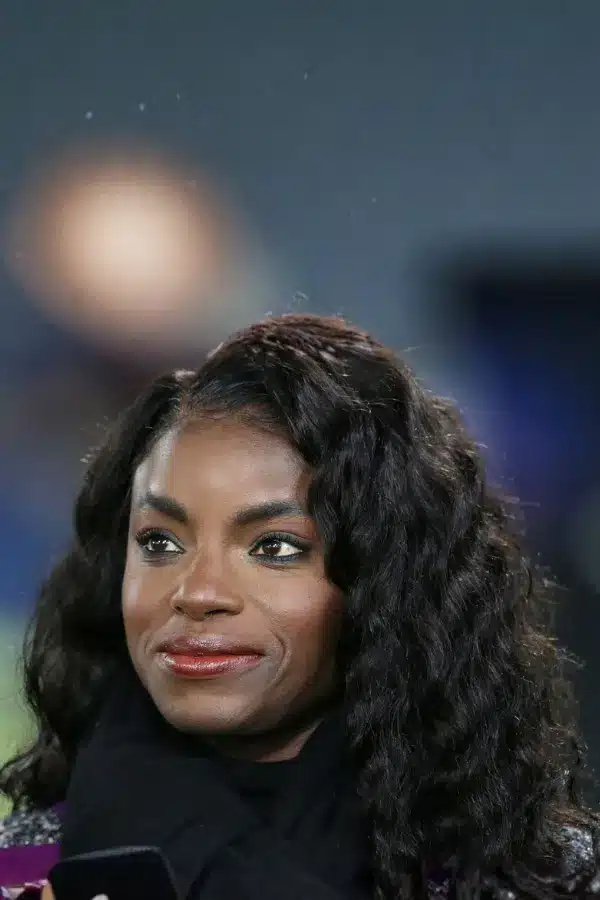
Eni Aluko: The Footballing Lioness Who Refused to Know Her Place
I have been saying for many years that women’s football has the advantage in terms of forging its own path and building a new audience that has not always been engaged by the men’s game. Yes, the men’s World Cup is about scale, noise and global reach but there is also a lot of noise about the gap between fans being outpriced from the sport because tickets are too expensive. So, a disconnect is becoming more evident. Whilst in women’s sport, connections are forging between the players, clubs and fans that is inspiring generations of girls and women. I think we should lean into what makes women’s football different; built for women on and off the pitch rather than replicating the patriarchal structures in men’s sport that were ultimately built for the other half.
People often do not talk about the impact on romantic relationships for women in sport, and how women doing elite sport is seen as untraditional in the dating arena. In heterosexual relationships it can be tricky for women who are exceptional at their sport to date men who may feel threatened or intimidated by their career and the spotlight that comes with it.
Being a young Black woman navigating a predominantly white sport at the highest level has been difficult at times. There is an expectation to know your place and not speak up about certain issues, specifically related to being a young Black woman. Dealing with this has built a lot of resilience and confidence in who I am, but also confidence that the truth is more important than anything. I have a voice, but there have been several times when people have tried to tone police it or simply undermine or discredit it. The UK media have played a significant role in attempts to discredit me. This seems to be a common experience for Black women with visibility in predominantly white spaces and I think it is time in 2026 we call it out for what it is and evolve.
My typical day starts with a Peloton workout, either on the bike, a strength session or both. I usually train between 7 and 9.30am, four or five times a week, and I do not compromise that time unless necessary. I have started to include Reformer Pilates in my weekly routine and am really enjoying it. I am fortunate that since I have a multi-hyphenate career, my days vary between speaking engagements, investment calls, production for my show or travelling abroad.
The version of me I have let go is the version that thinks first about the validation of others rather than the inner validation that builds impenetrable confidence within. This has taken me some time but I think as a result of letting go of external validation it has freed me up to do new things and reinvent myself. I have tapped into renewed joy and playfulness which I am embracing day by day.
Football in the UK is still very much the domain of men, with real challenges around dealing with women who are excellent and outspoken at the same time. I always come back to the belief that excellence will speak for itself and the mantra that silence never changes anything. I think there are always ways to communicate respectfully and collaboratively even when the subject matter is challenging. This is a skillset of emotional intelligence that women have in abundance. I also think male allies like Alexis Ohanian are important because he often speaks up for women's sport so women do not have to. His work in equity rights and significant financial investment in the future of women's football have been incredible.
I wanted my book, They Don't Teach This to address real life issues such as identity, failure and success that the reader could relate to, rather than an expected sports autobiography focused on the athlete on the pitch. I really enjoyed the process of writing it because it allowed me to reflect on all the lessons I had learned through experience and share those as lessons for the reader too.
Sport has the power to address world issues that involve social justice, and athletes have the power to use their platforms for social good. In football I have always tried to speak up about racism and sexism directed at me or others. My biggest focus has been to encourage greater sanctions and accountability so that racism has the strongest possible deterrents. Football is an incredibly diverse sport with significant contributions from diverse people, so hatred and racism simply cannot continue to thrive. Online abuse is also an area that requires significant deterrents and I will continue working with the right organisations to push for change.
Leadership for me is about shared vision between the leader and the team. I really enjoy sharing a vision with others who then believe in it and go on the journey together to achieve it. As a leader it is critical that you communicate vision and values clearly and understand all the different ways people in the team can contribute. I learned a great deal about that from Emma Hayes, who was my coach at Chelsea for six years. She was a brilliant visionary.
I want young Black girls to understand that football at the highest level is a space for them, and if they work hard and believe in themselves, they can get to the World Cup. There is no limit to dreaming. Seeing is believing, but it is important for young Black girls to believe this even if they cannot yet see representation of it.
I am proud of the fact that I am not solely defined by football and have built a life that allows me to experience my Nigerian and African heritage through frequent travel to the continent, which has helped me develop an inner knowing and connection to my heritage that I did not experience playing football. My brand Hyphenated People is a travel and culture brand dedicated to helping people experience the deeper layers of who we are through travel.
What to read next
Advertisement

Advertisement
