Advertisement


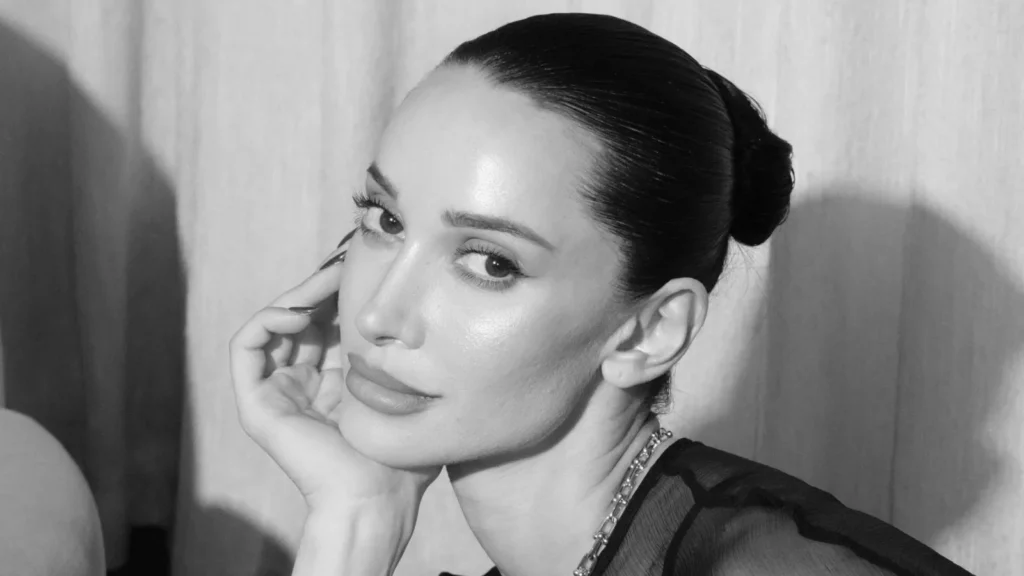

She Was at Rock Bottom When She Wrote Her First Book. She’s Now Sold Over a Million Copies.
The person I was in those addiction years was not broken or weak or a cautionary tale. She was in pain, and she was doing the only thing she knew how to do to survive. When you reduce this to a before-and-after, you lose the humanity of my story, and you accidentally suggest there was a single switch that flipped, when really it was years of slow, messy, non-linear work.
The thing most people get wrong about change is that they arrive believing they must fix themselves before they are allowed to have the life they want; that self-worth is the reward waiting at the end of all the self-improvement. I would gently flip that.
When manifestation gets flattened by wellness culture, it does not threaten me because the commercialised version – the version that is just an aesthetic or a hashtag – was never the real thing to begin with.
I think about technology as the doorway, not the destination. The tension only exists if you expect the app to do the work for you, and it cannot, just as a book cannot. What it can do is meet people where they already are, which is on their phones, and give them a way in. The internal practice still has to happen inside the person.
My own rock bottom is exactly where manifestation began for me. I was not in a calm, aspirational place when I started. I was at the lowest point of my life, and that is precisely why I know this practice works when everything has fallen apart, because it is the only condition I have ever really tested it under.
What you can do in crisis is make one decision: that this moment, as unbearable as it is, is not the end of your story. For me it looked like one tiny act of faith at a time, choosing to believe that things could change before I had a single piece of evidence that they would. The pain is real, and you have to let yourself feel it. But underneath the feeling, you can hold the line on one belief: this is not where my story ends.
I would never suggest that mindset alone dismantles real structural injustice, because it does not, and saying it does would be both untrue and cruel. The barriers women face are real and external, and no amount of visualisation removes them. But I do not see personal empowerment and structural change as opposites. I see them as working together. The structural forces are precisely why a woman's inner sense of her own worth matters so much, because that is the thing the world keeps trying to erode and reclaiming it is its own form of resistance.
When you already believe you are worthy, self-improvement becomes joyful, something you do because you love yourself, not because you are trying to outrun the feeling that you are not enough. The other thing people get wrong is the timing. They want transformation to be a single dramatic moment, when actually it is the unglamorous, repeated, daily choices that rewire you. Change is not the lightning bolt. It is what you do the morning after, and the morning after that, when no one is watching and nothing feels different yet.
There are days when the very thing I built from a place of passion becomes deadlines and emails and pressure, and the magic feels very far away. But what pulls me back, more than anything, is that I am genuinely lucky to witness my why every single day through the people I get to interact with and the stories I get to hear. Beyond that, I really do practise what I preach, and that constantly reminds me of the power of self-development, manifestation and healing.
Everything I am building is designed to point you inward rather than keep you scrolling. The aim is to give structure, guidance and consistency to something that can otherwise feel abstract or hard to start alone. If the app gets you to close your eyes, visualise and reconnect to yourself, then the technology has done its job precisely by getting out of the way.
When you grow up not quite belonging anywhere, you develop this deep longing to create a sense of home, and I think that is exactly what the community I have built has become for me as much as for anyone else. ALIA, my fragrance brand, even carries this. The name connects to my heritage and means to rise higher, so the thing I felt set apart by became the thing I drew strength from.
The before-and-after framing can make people feel like failures if their own transformation is not clean and complete. Mine was not. Those years were not wasted and they were not shameful. They were part of me becoming who I am, and I have real compassion for the woman who lived through them. She was not a problem to be fixed. She was someone who had not yet been shown she was worthy of more.
You cannot make good choices for yourself when you do not believe you deserve good things. As for how far away she feels now, it is a strange thing, because in some ways she feels like another lifetime, and in others she is right here. I have not disowned her. I carry her with me, because forgetting her would mean forgetting the whole reason I do this. The distance is not really about time; it is about belief.
A low day is not a failure of the work. It is part of being human. Manifestation done properly is rigorous inner work, grounded in neuroscience, about healing and self-worth and taking responsibility for your life. When I see it reduced to a vision board and a bit of wishful thinking, I do not feel defensive; I feel more committed to showing people the substance underneath it. The scepticism does not bother me either, because a lot of it is aimed at a caricature I would also dismiss. My job is just to keep doing the real work and trust that it speaks for itself.
Discover The Manifest App at roxienafousi.com or download it directly from the Apple Store. For daily inspiration, follow @theofficialmanifestapp on Instagram.
What to read next