Advertisement


Your Body: Still Under-Researched, Still Misunderstood, Still Killing You
We might be the most wellness-literate generation of women in history. We track our sleep, max our proteins and know our cortisol from our collagen, yet most of us cannot answer basic questions about how our bodies actually work. Why do women live longer than men? Why are our bones so fragile? And what in the name of mood swings are hormones?
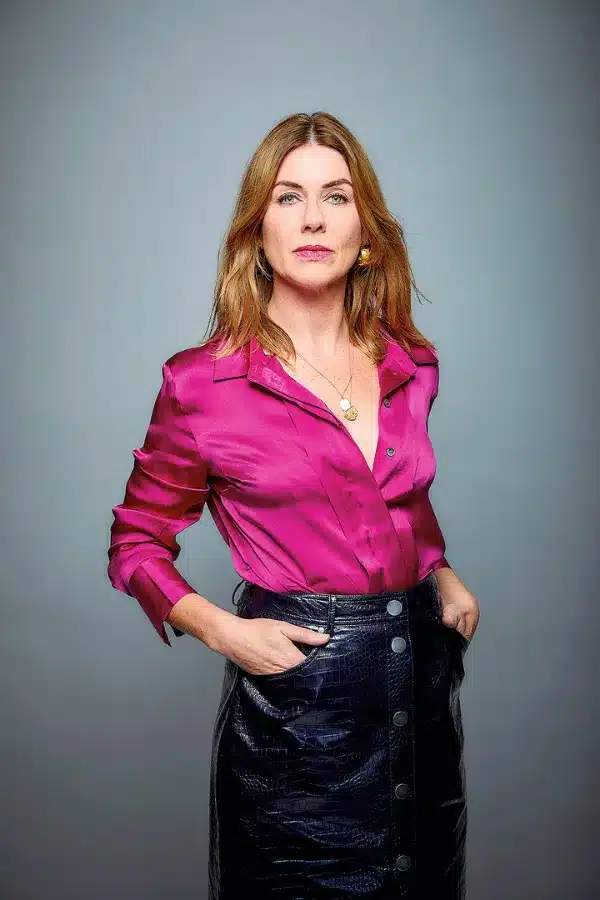
Darned if I know, but these are just some of the questions Polly Vernon set out to answer in writing How The Female Body Works. She spent two and a half years on it, interviewing experts across every discipline from neuroscience to gynaecology. "I like it because I'm talking about something proper and sharing other people's information," she says when we meet in a north London café. "It's not really open to discussion, is it? This is science." As someone who dropped science as soon as she could, I loved the way the book was written so accessibly, a testament to Vernon’s ‘other’ career as a lifestyle columnist. My younger daughter, currently sitting her biology GCSE, was equally keen to read it, lending it the distinction of being the only book of mine she’s ever picked up.
While the science might not be open to discussion, the topics Vernon covers certainly are, unmasking mysteries that speak to the fact that while we have been taught to optimise our bodies, we have not been taught to understand them. This knowledge gap affects women at every age and stage. In the book's introduction, Vernon writes about how she spent years driving her body around like a car with zero interest in the manual. Like many women her age, she wanted to understand what was under the bonnet.
"They were all brilliant," she says of the experts whose knowledge shaped the book. "Some were quite brusque and very medical, but so clever and smart. They indulged me hugely. Some were surprised by my absolute lack of knowledge, but they listened. It all really matters to them, and I think they were happy that someone wanted to get their knowledge out there."
Of all the medical truths she discovered, what shocked her most was the fact that we are not socially trained to look for the specific signs of a woman having a heart attack. "We generally know the signs of a man having one, but it presents differently in women, and women do die more regularly from heart attacks as a consequence." I remember being equally shocked when I read that passage, particularly as I’d trained as a first aider during the pandemic. Had I forgotten, or was it never taught?
The topic that enraged her most was female pain. "I interviewed Professor Andrew Horn, the biggest endometriosis specialist in the country, and asked whether it was true that women suffer more pain than men. He said: of course you do. He was amazed at what women come to him with in relation to endometriosis, which is such a severe level of pain. I also didn't realise that women are more than three times more likely to suffer migraines, and 30 times more likely to suffer UTIs. We are conditioned to suffer pain. We're told it's our duty, our identity, and also that we're somehow good at it. So there's an idea that we're better at dealing with pain than men. We are not. We experience it in exactly the same way. We've just been socialised into accepting it."
These revelations caused her to change her outlook, as will anyone who reads the book. I tell her that my teenage daughters are far better at advocating for their own health than I was, and she’s pleased. "I'm really keen that we're very careful with language around pain, that we don't say women tolerate it, cope with it, or deal with it better. We don't. We have just been told there wasn't really a choice. Imagine what we could do if we weren't in pain. Imagine how much better we'd be at everything if we weren't first having to overcome this baseline. It's not okay."
The book also discusses medical misogyny, a topic close to my heart, as it is with so many women who feel they’ve had a lifetime of either being fobbed off with half-baked explanations, or had their concerns diminished. Vernon says the best thing we can do to counter medical misogyny is to be as informed as we possibly can. "If you educate yourself, it's easier to ask for what you need. And also have a sense of how much pain is acceptable."
At one point in the mid-noughties, Vernon inadvertently became a poster girl for women who did not want children. Her stance seemed to vex some people to a degree that still feels unfathomable. "I think mainly it's: oh, you're making me think about a life I could have had, and I don't want to do that," she says now. "I always weighed it up really carefully. And no, I don't regret it." Besides, why bother with kids when you have a five-year-old Labradoodle called Rita? "She really made me realise I was right not to have children, because I worry about her so much. I recently sent the vet a photo of a lump on her chest. He phoned me up and said: that's her nipple."
She loves boxing and Pilates, writes in the mornings, and breaks at ten past two for Countdown.
After interviewing celebrities for decades, has anyone surprised her? "Gwyneth was very giving and I didn't expect it. I was asking about her morning routine and she said it might change soon because her kids were leaving home. I asked how she felt about that and she went off on one about being terrified. She clearly wanted to talk about it. Most people actually do want to talk about themselves."
After reading Vernon's book, they will want to talk about their bodies too. As she writes in its conclusion: "Support it. Feed it. Move it. Rest and relax it. Heal it. Advocate for it. Take it out dancing." There can be few wiser words to live by.
How The Female Body Works is available to purchase now.
If Polly has made you slightly furious, humbled and considerably better informed and you want more of the same in person, she will be speaking at
Live Well, theAllBright's annual wellbeing festival or women who are done waiting for permission to take their health seriously. Join her, 25 September, Old Sessions House, London.
Advertisement

What to read next