Advertisement


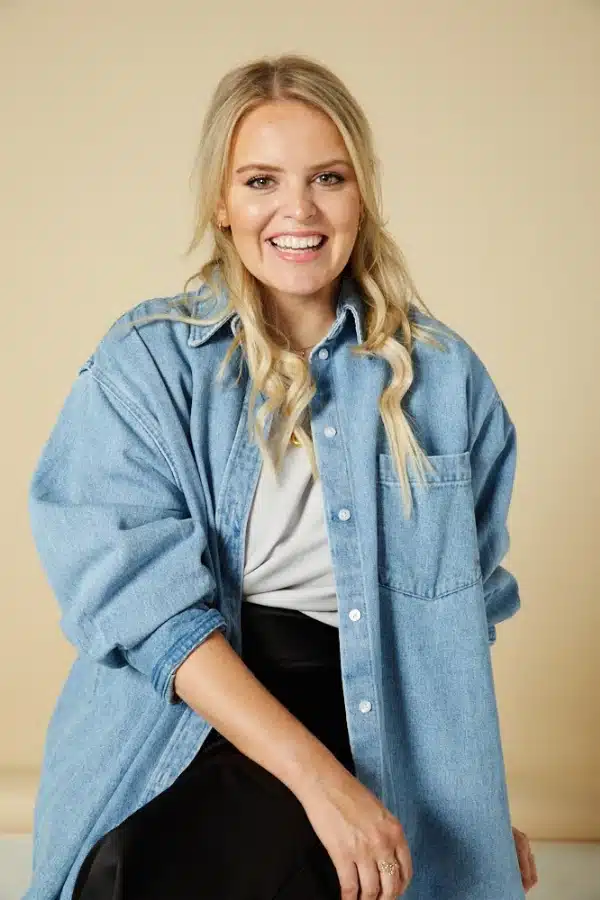
Alex Light: What Happens to Your Body Image When You Become a Mother
When you hear someone is a ‘full time influencer’, you imagine a very glossy, glamorous life, but the reality is far more ordinary and far more chaotic than that. In an interesting way, being an influencer is closer to the life I hoped for than I realised, when I started out. What I really wanted was autonomy, to talk about things that mattered to me, and to build a career around ideas I care about. So, while the logistics look perhaps somewhat messier than I imagined, the substance of this career feels very aligned.
The advice that worries me the most for women, is anything that frames their body as a problem to solve. Often, it’s packaged as being helpful; ‘don’t worry you’ll bounce back once the baby is here’, usually followed by a list of things you should try to get there. On the surface this sounds reassuring, but the underlying message is that our bodies are projects, and our happiness is conditional on fixing them. I’m currently pregnant, and it’s striking how quickly these conversations appear again. There’s already this quiet assumption that the next step will be getting my body ‘back’, as though the body I have now is just a temporary problem to correct.
The biggest ‘risk’ I’ve taken publicly, was opening up about my eating struggles on Instagram back in 2017. At this point, only a couple of people in my personal life knew about my eating disorders and struggles with body image. At the time, it also felt like eating disorders were only something people spoke about in very controlled, clinical ways, and often only once they were completely ‘recovered’.
Sharing something that personal and admitting that recovery can be messy and ongoing felt quite exposing and vulnerable. I remember feeling SO nervous about how it would be received. Social media can be an unpredictable place, and once you share something like that you can’t take it back. The response was overwhelming in a way I hadn’t expected… I received so many messages from people saying they had never seen someone talk about those experiences so openly, and that it made them feel less alone.
It really reinforced something I’ve come to believe strongly: the things that feel most uncomfortable to talk about are often the things people most need to hear. So yes, I would absolutely do it again.
I find being organised really hard, it’s a daily struggle. For years I thought I needed to become someone with colour-coded systems and perfectly structured routines; I tried very hard to be that person and constantly felt like I was failing. Eventually, I realised I work much better in bursts of focus rather than rigid schedules. Letting go of the idea that I must be good at everything has been incredibly freeing.
What we know from decades of body image research is that the more we focus on monitoring and evaluating our appearance, the worse our mental health tends to be. Constantly scrutinising our bodies doesn’t build confidence or self-worth, so when advice reinforces the idea that our bodies must always be controlled, reduced, or perfected, it keeps women locked in a cycle where self-worth is always out of reach. The more helpful conversation is shifting the focus from appearance to experience; asking how our bodies allow us to live our lives rather than how well they meet an aesthetic standard.
Having a career in social media means there’s often an assumption that my work is superficial, that it’s just posting photos online. But talking about things like body image and cultural pressure in a meaningful way requires a lot of research, thought, and emotional labour. It’s much closer to commentary or journalism than people sometimes realise.
Motherhood changed my relationship with my body in ways I didn’t fully anticipate. Before having my son, I assumed that the work I’d done around body image meant I’d be fairly protected from postpartum pressures. But after giving birth, I experienced unexpected weight gain, which threw me off balance, and a resurgence of binge eating behaviours. That was confronting, because it challenged the idea that you can do enough ‘work’ on body image and be forever in a good place with it. At the same time, becoming a parent shifted my perspective. I realised that the goal isn’t to reach a point where you never struggle again; it’s to have the compassion and tools when you do.
For me, self-acceptance is less about achieving perfect confidence and more about where I place my attention. The ongoing work looks like small decisions: unfollowing accounts that make me feel like my body is a problem, noticing when I start comparing myself to other people online, and reminding myself that my body is not the most interesting thing about me.
Some days I still have negative thoughts about my body, especially while pregnant: your body changes so quickly and the changes feel totally out of your control. The difference now is that those thoughts don’t dictate how I treat myself.
I feel most like myself when I’m having thoughtful conversations about culture, media, and body image, the kinds of conversations that make you see something differently afterwards. I feel least like myself in environments where appearance is the main currency - spaces where the conversation revolves around how people look rather than what they think. That contrast is clarifying. It reminds me what matters.

The Price of Pretty
by Alex Light
If this piece resonated, join AllBright’s Motherhood Works Summit this June in partnership with Mindplace (part of Bupa) to explore the powerful transformations that motherhood sparks, and how it redefines success, reshapes ambition, and helps to clarify what comes next.
Bupa believes in a world where caring for your mental health, especially for mothers, carries no stigma. Where talking to a therapist is as accepted as going to the gym or visiting the doctor. That’s why they’ve created Mindplace, a global network of wellbeing centres, to make caring for your mental health as easy and stigma free as possible.
What to read next