Sydney Sweeney Has Two Emmy Nominations and Yet the Internet Just Cannot Stop Talking About Her Breasts
Nice boobs, shame about the ambition
Join the women who read theALLBRIGHT Editor’s Letter every week. Sharp, honest and always worth opening.
At first glance, a film star’s cleavage and a football manager’s worktops don’t have much in common.
One belongs to an actress whose curves have become the defining feature of her public image. The other briefly appeared behind a renowned football manager during her analysis of the Men’s World Cup. Yet both have become shorthand for an idea about women that’s been hiding in plain sight: we can only be one thing.
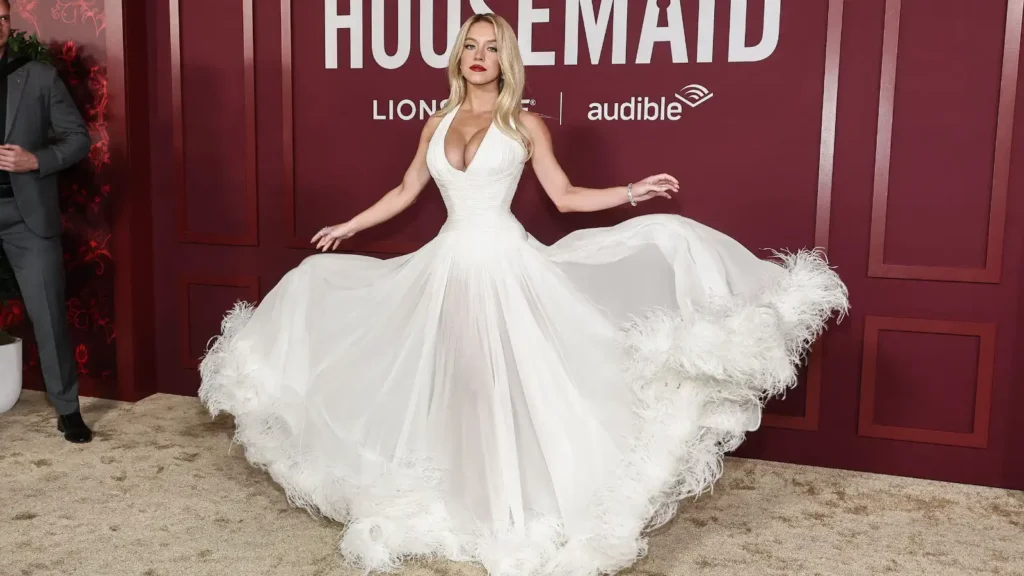
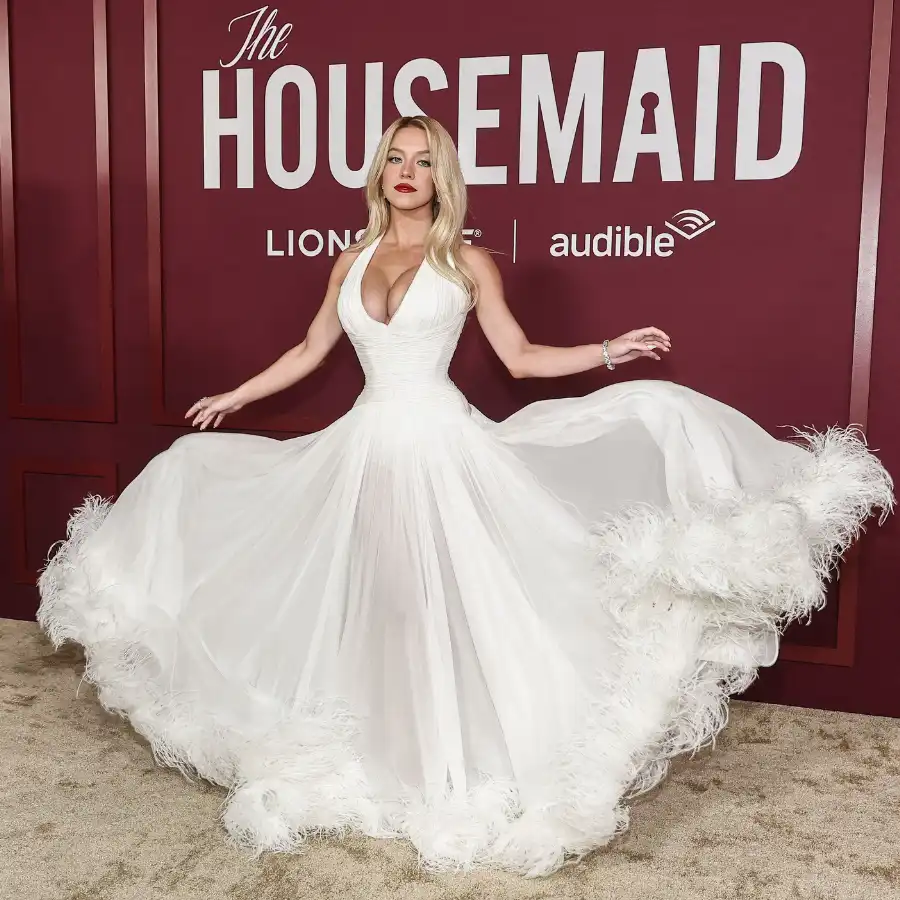
When Sydney Sweeney steps onto a red carpet, the conversation centres almost exclusively on her breasts. That’s partly because she has no interest in disguising them. No minimiser bras or strategic tit tape here. She embraces an overtly glamorous, unapologetically sexual image and appears happy to enjoy the attention that comes with it. Good for her.
The trouble is she doesn’t just want to be a bombshell. She also wants to be taken seriously for her acting. That shouldn’t be remotely controversial for someone whose performances have earned two Emmy nominations. Yet when she casually described herself to an interviewer as being "in the arts", other corners of the media lifted those three words and delivered them with the written equivalent of a side-eye. Someone who embraces her sex appeal surely can’t also take her craft that seriously, critical acclaim notwithstanding. The message was clear: nice boobs, shame about the ambition.
Closer to home, Emma Hayes’ kitchen backdrop inadvertently became a supporting character in her professional life when, during ITV’s World Cup football coverage, Hayes delivered her commentary from a set that some viewers decided looked suspiciously like a kitchen.
The internet promptly did what the internet does – the set acquired a draining board and a few saucepans. The tabloids did what they do and turned the memes into a sexism row.
The argument went that Gary Lineker would never have been given a domestic backdrop, and that Hayes, one of football’s most respected tacticians, had been undermined by the suggestion of oak cupboards and a marble worktop.
It’s not wrong to question how female experts are presented on television, but should we really presume that placing a woman anywhere near something resembling a kitchen must, by definition, diminish her authority? Should we pretend that the millions of women who have successful careers aren’t also making packed lunches and emptying dishwashers? The backdrop isn’t the issue; it’s what we assume it means: Housewife or expert. Pick one. And never the twain shall meet.
We so often define women by the most noticeable thing about them. Sydney Sweeney becomes the one with the breasts. Emma Hayes becomes the woman ITV put in a kitchen. A decade before that, Theresa May was the politician with the shoes, as though a pair of leopard-print heels held more weight than being one of the most senior politicians in the country. "You can be clever and like clothes. You can have a career and like clothes," May said at the time. Sad, really, that she needed to say it at all.
It’s tempting to dismiss all this as human nature, because we simplify everyone. But do the rules apply evenly?
Nobody questioned Matthew McConaughey's acting credentials when he spent much of the nineties with his shirt off. Male football pundits broadcast from home offices without those rooms becoming what defines them.
It’s a story as old as time. Literally. Eve is remembered as the woman who tempted Adam to eat the forbidden fruit. But what else was she? While Jesus spends his adult life travelling, performing miracles, challenging authority and building what, in modern parlance, would be considered an impressive personal brand, even in name his mother is largely reduced to a single defining characteristic: the Virgin Mary.
Men get the plot; women get the label.
As someone who has spent her career interviewing reality TV stars and pop icons, CEOs and political leaders – I have to take some responsibility here. Journalists are storytellers, and stories need recognisable characters. When protagonists fit into neat categories, readers can make sense of them. Bombshell. Brain. Mother. Leader. Hero. Temptress. Once someone has a role, anything else becomes an inconsistency to explain.
We also love a narrative arc. Act one. Act two. Redemption. Reinvention. It makes for satisfying storytelling because it creates the illusion that people move through life with one identity, one purpose.
Take Angelina Jolie. For years she was cast as Hollywood’s beautiful wild child. The pillow lips. The tattoos. The Brad Pitt years and all the melodrama. Then came motherhood and humanitarian work. The story we were told was one of reinvention. But did she really reinvent herself? Or was another part of the same woman just taking centre stage while another slipped behind the curtain for a while?
The press has to tell stories. That’s the job. The problem comes when we absorb those stories as though they’re a template for real life, convincing ourselves that we too must assume one identity at a time.
I recognise this problem in my professional life, which has gradually evolved into what people politely call a "portfolio career" – a phrase that makes it sound considerably more organised and glamorous than it usually feels mid-week. Depending on the day, I’m a journalist, content strategist and editor, I head up the marketing team for an international school, I run my yoga business and am preparing for the final exams in my therapy diploma.
It doesn’t make for a very tidy story. It makes LinkedIn a bit of a nightmare. It leaves me with no neat answer to the deceptively simple yet oddly dreaded question: "So, what do you do?"
The interesting thing is that nobody told me I have to choose. The pressure has come entirely from me.
Somewhere along the way, I started applying the storytelling instincts I’ve relied on throughout my editorial career to my own life. I’ve absorbed the idea that credibility is easier to trust when it fits neatly into one (preferably short and conjunction-free) sentence.
How freeing might it be to stop editing myself into a better story? Stories are tidy, but I’m not. Perhaps if you’ve read this far, you’re not either.
That’s the lesson I’ve taken from all of this. Women aren’t contradictory, or unusually complicated. We simply contain multitudes. The sooner we stop trying to explain that away, the sooner we can celebrate it for what it is. The media’s job is to flatten people into headlines. Ours is to remember that headlines are not human beings. No single body part defines a woman. No single room defines a career.