
Claudia Winkleman: How No Personal Brand at Work Is a Brand
Claudia Winkleman: How No Personal Brand at Work Is a Brand
Now that Claudia has left the sparkliest show on television to launch her own prime-time chat show, which launched In March 2026, it’s worth rewinding to the moment she first took over Strictly’s top presenting job. Back then, if you were aiming for the next rung in your own career, one professional buzzword was impossible to avoid: personal brand. And the advice around it was weirdly specific.
Personal Brand at Work: The Advice We Were All Given
The message wasn’t simply that we needed a personal brand; it was that we needed to invest time cultivating it in forensic detail. From the shade of lipstick in our LinkedIn profile picture (a shimmering nude, we imagine, in Claudia’s case) to the tone of our voicemail greeting (self-deprecating, perhaps, with a touch of whimsy). Everything we communicated supposedly ‘said something’ about us, and the sum of those signals was “what people would say about us when we weren’t in the room” – Jeff Bezos’s widely cited and, frankly, unnerving definition of personal brand. It lived in the details, and every choice, we were told, either reinforced or diluted it.
To understand why this advice resonated, it helps to look at what was happening at the time. Women were still pushing to be taken seriously in rooms that weren’t always welcoming. Sheryl Sandberg’s book Lean In was widely held up as the blueprint for ambitious women, urging us to step forward and claim our place. Claudia, professionally at least, had clearly done just that: when the BBC first published a list of presenters’ salaries, she was the highest-paid woman – though that still placed her eighth on an overwhelmingly male list, sparking a national conversation about gender pay gaps in broadcasting. Against that backdrop, the promise of something we could control had a certain logic. If the system wasn’t going to judge us fairly, perhaps a tightly managed, slightly more polished professional avatar (blunt fringe optional) could help.
But it carried an extra demand. Alongside doing our actual jobs on top of everything else (the phrase ‘mental load’ wasn’t circulating widely yet), we were expected to dedicate time to packaging ourselves. Competence wasn’t enough without a coherent narrative attached, and the gender subtext was clear: the advice re personal brand was aimed largely at ambitious women. (It’s hard to imagine Mark Zuckerberg, Sheryl Sandberg’s line manager at the time, worrying about whether his tie matched his work persona.)
Fast forward to today. Gender equality remains unfinished business – in the corporate world and in showbiz. Women still have to work harder to be taken seriously (the BBC’s gender pay gap currently stands at 7.2%, significantly lower than the UK national gap of 12.8%). But the context has shifted. The burnout epidemic, perimenopause, emotional labour and the idea of the double shift have all entered the mainstream conversation. Against that backdrop, the idea of scheduling a quarterly self-audit to ensure your personal brand is getting adequate cross-platform exposure feels faintly absurd. As anachronistic as a 1950s issue of Good Housekeeping advising housewives to have a gin and tonic waiting for their husbands at six.
Visibility at Work for Women: What Claudia Gets Right
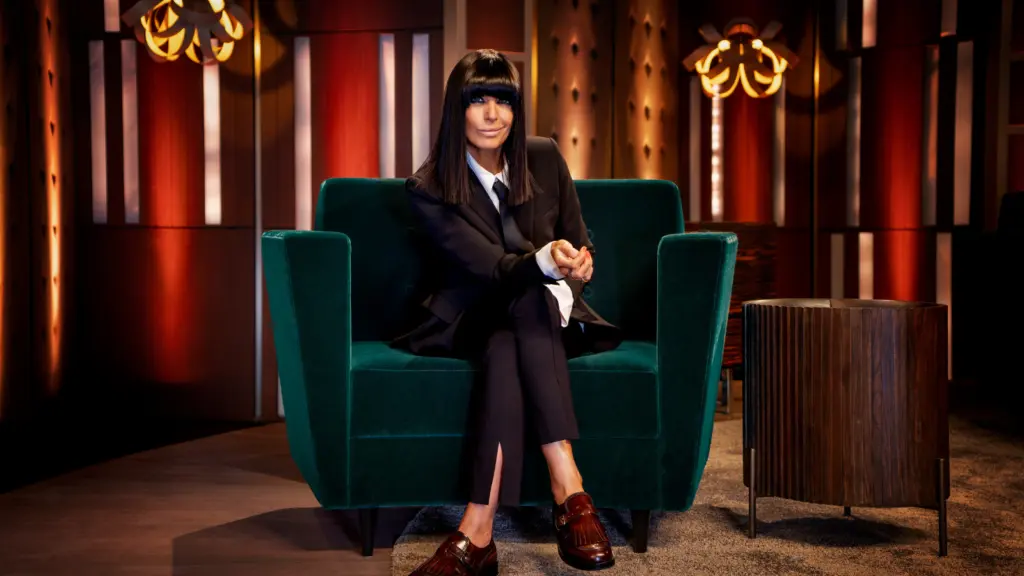
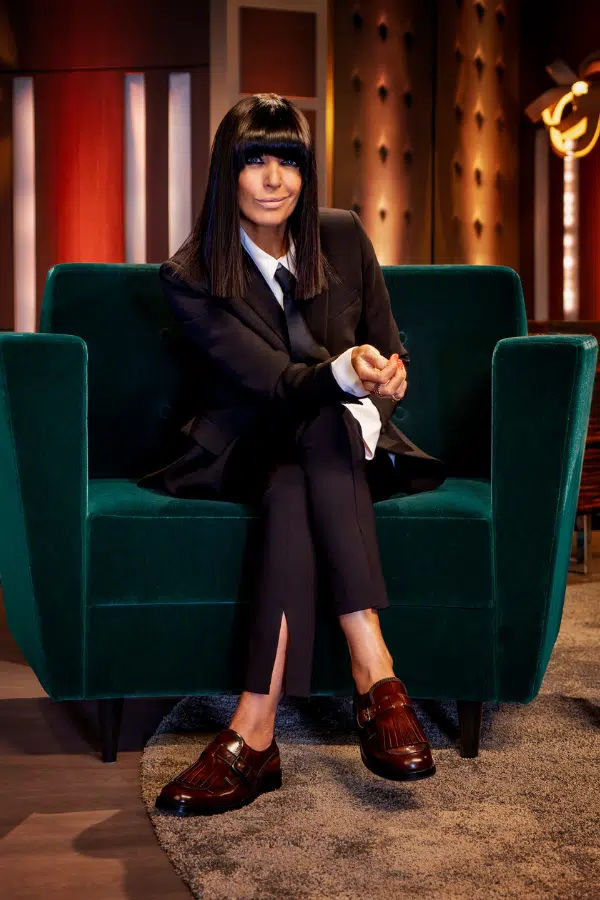
All of which is why Claudia Winkleman is such an interesting case study, even if ‘personal brand’ isn’t a phrase we can imagine her using with a straight face. She’s spent decades at the top of British broadcasting, fronting flagship shows, and yet what do we really know about her? The list is surprisingly short. There’s the fringe. The fake tan. The self-deprecating humour. We know she has a family, but almost nothing about them. And yet we feel as if we know her.
This is where it gets interesting. It would be easy to mistake what she’s doing for the kind of forensic curation we were once sold as essential. But her recognisability doesn’t seem to come from constant self-optimisation; rather down to restraint. Her interviews are charmingly inconsequential. In one, given to Grazia, we learn that she favours beef-flavoured Hula Hoops, loves a chunky knit, and adopted a dog when her children started to leave home. Her only professional ‘reveal’ is that she gets nervous before a pilot broadcast.
When pushed for more, she states: “I would like to tell you everything, but I really mustn’t.” She’s referring to the final of The Traitors, but the line, as well as protecting a TV spoiler, feels like it could double as a career philosophy. The juiciest thing we have on her is that red carpet appearance with smudged eyeliner – a paparazzi shot she now, with characteristic self-mockery, uses as her Instagram profile picture.
In a celebrity culture where personal revelation is rewarded with relevance, Claudia’s approach feels almost radical. She gives us what she’s comfortable giving, and that’s it. The result is that her work – her actual work – has room to breathe. When her broadcasting talents aren’t competing with a stream of domestic content, what she’s good at – commanding a room, entertaining millions – can take centre stage.
If we apply her approach to life in the spotlight to our professional lives away from it, the takeaway is simple: we can be visible, relatable and even aspirational without forced displays of vulnerability on LinkedIn, and without constantly checking whether what got us hired is sufficiently on show. That kind of paring back isn’t about ‘leaning back’. It’s about knowing our non-negotiables and sticking to them. For those of us who’ve absorbed the idea that drawing lines makes us cold, difficult or unlikeable, it’s a useful reminder that we don’t have to compensate with over-explaining, over-sharing or people-pleasing.
Women and Personal Branding: The Solidarity Nobody Talks About
Something else we’ve long been handed is the women vs women script – Kylie versus Dannii, SJP versus Kim Cattrall, Meghan versus Kate. And yet, after two decades of Claudia (diminutive in head-to-toe black) presenting alongside sequinned, model-esque Tess Daly on a show that’s had more than its fair share of scandal, there hasn’t been a whisper of rivalry or cattiness between the co-hosts. On the contrary, what shines through is genuine friendship and an unspoken sense of having each other’s back. There’s something refreshing in watching two women share a spotlight without either needing to be diminished for the other to shine. And perhaps something revealing in the fact that it feels refreshing at all.
This embracing of the sisterhood – of being a woman’s woman – is perhaps a big part of Claudia’s appeal. Maybe many of us have been hungry for a version of solidarity that hasn’t got time to play along with a media culture still hellbent on pitting women against each other. A version of “I’ve got you” that speaks for itself and doesn’t need to go on a T-shirt or into a hashtag. And if that kind of unspoken solidarity were to become the foundation of our professional identities – rather than our carefully curated bios – how different might personal brand – and the workplace overall – begin to look?
What Ambition Looks Like When You Stop Performing It
The other place brand shows up, of course, is in professional decisions. Not the micro-adjustments we were once told to obsess over, but the visible choices: what you stay for, when you leave, and where you go next. Winkleman’s announcement that she was stepping down from Strictly (she wanted to leave on an “absolute high”) was refreshingly free of drama. Decisions to leave are often tangled with emotion and uncertainty, but with a little distance they’re usually just full stops on a CV. A perspective those of us prone to ruminating or staying longer than we really should might do well to adopt.
What’s most striking of all is what comes next. A prime-time chat show at a stage of life when women are still fed a storyline about shrinking visibility and dwindling opportunity. For those of us in or nearing that phase, it lands at a moment when we might be asking ourselves what ambition means now, what pace is sustainable, and – perhaps most honestly – whether we can still be arsed with all the nonsense the climb seems to require.
So what do we take from this without turning it into a checklist? Perhaps it’s simply permission to retire the version of personal branding that turned us into products to be continually refined.
A different version might look like this: not “What would Claudia do?” but “What wouldn’t she be bothered with?” And if we stopped bothering with those things too, what room might that create in our own lives?
What to read next


