Cate Blanchett, Delulu Culture and the Science of Expecting More

Cate Blanchett, Delulu Culture and the Science of Expecting More
The expectations you have of yourself are outcomes waiting to happen

Join the women who read theALLBRIGHT Editor’s Letter every week. Sharp, honest and always worth opening.
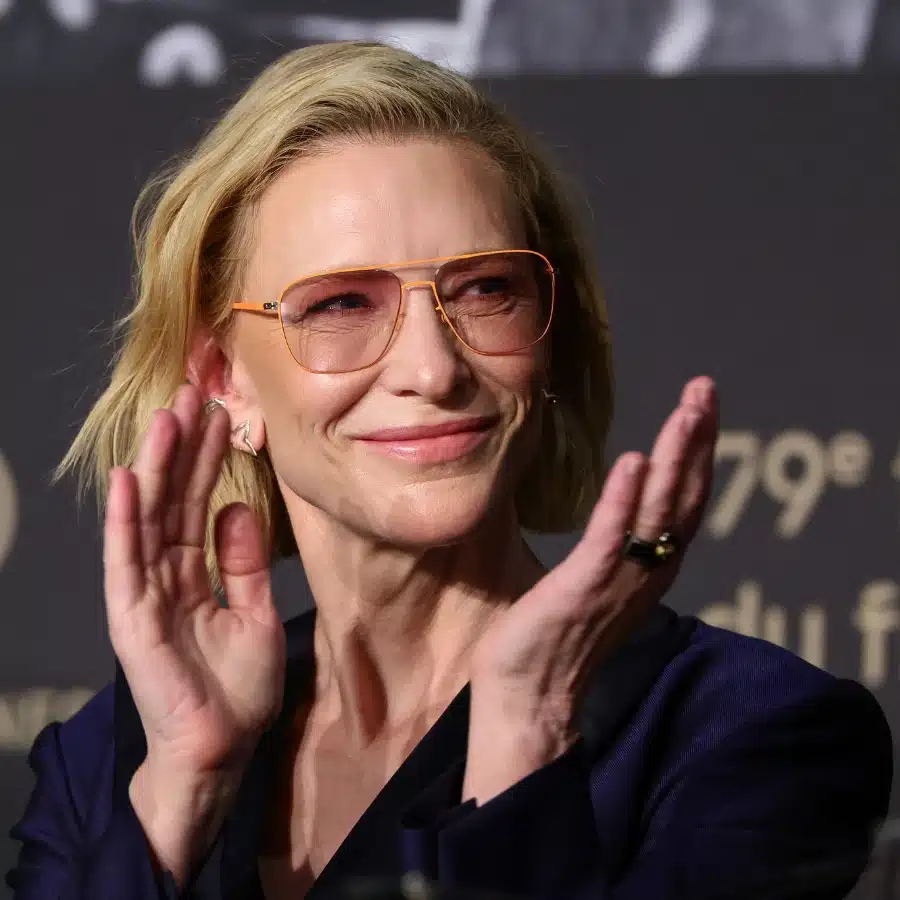
At the Cannes Film Festival, Cate Blanchett said something that stopped me mid-scroll. "If you're not risking anything, everything tastes like rehydrated potatoes." It is not a sentence you expect to find yourself citing in an article about neuroscience. But bear with me.
For the last few years, any time I've spiralled about a deadline, talked myself out of pitching for something, or convinced myself I was about to make a complete fool of myself professionally, my 10-year-old daughter, slash life coach, has responded with the same advice: "You need to get more delulu."
If you don't live with someone who speaks almost entirely in TikTok language, "delulu," short for "delusional," is essentially the belief that acting as though success is inevitable might somehow magically bring it closer. The phrase emerged from K-pop fan culture before spawning roughly 26.98 nonillion TikToks dedicated to the idea that "delulu is the solulu," in other words, being slightly delusional is the solution to any problem.
Act like the top job is yours before you've finished your work experience week. Check. Assume the impossible Hollywood crush will turn up and propose any minute now. Check. Convince yourself your side hustle is six months away from billionaire status despite currently making £14.72 a month. You get the idea.
You can see why it caught on, especially for a generation whose early years were overshadowed by a succession of lockdowns. We obviously want our children to think big. But there's also a point where self-belief stops being empowering and starts becoming, well, delusional. Fortunately, like most internet trends, this one is apparently on its way out, or so my pre-teen informs me.
TikTok has confirmed she's right. Its trend forecasters have decided that 2026 is all about realism. Manifestation culture is out. Fantasy thinking is over. From here on in it's all about discipline and keeping it real.
As joyless as that sounds, there's a certain relief. Because obviously we don't want our children believing they're guaranteed success simply because they wished hard enough for it. Real life involves rejection, failure, bad timing and all sorts of things we can't control.
But it has left me wondering if there's anything worth salvaging from the undeniably more glamorous delulu era. And it turns out, yes, there is. A whole bunch of neuroscience that's been sitting there on the shelf in my local library and that I could have been working my way through instead of watching TikToks of pre-teens attempting to manifest a Demon Hunter boyfriend.
Long before K-pop psychology came up with delulu, actual psychologists had already defined something remarkably similar: the expectation effect.
We tend to tell ourselves that success is driven by the obvious things, ability, experience, confidence, timing. And of course, all those things matter. But there is something else sneakily influencing how our lives unfold. Our own expectations.
This isn't about manifestation. It's not about visualising your way to the C-Suite. You're not about to be told that you need to find the positives in everything. Sometimes a crap day at work is just exactly that. What scientists have been describing is something far more concrete and, in many ways, more unsettling. Your expectations don't simply influence what you think might happen next. They influence what you do as a result, and ultimately where you end up.
As science writer David Robson puts it: "What we feel and think will determine what we experience, which will in turn influence what we feel and what we think, in a never-ending cycle."
Imagine two women at a similar stage in their careers, equally qualified and equally motivated. One waits until she feels fully ready before putting herself forward, second-guessing herself throughout. The other moves slightly before she feels prepared, assuming her work will eventually be recognised. That second woman is not deluded. She is doing what Blanchett described: risking something. And the science suggests her body and brain respond differently as a result. Five years later, their careers look very different. Not because one was more talented. Because one expected more, and behaved accordingly.
What we expect for ourselves doesn't appear from nowhere. It comes from our upbringing, our life experiences and our internal narratives. But it's also shaped by the wider culture around us. For women especially, expectations are influenced by everything we absorb about who gets to succeed, who gets listened to, who gets interrupted, who gets praised as "brilliant" rather than merely "reliable." Over time, those assumptions stop feeling external and begin shaping our own expectations about what is realistic for us.
In his book The Expectation Effect: How Your Mindset Can Transform Your Life, David Robson describes the brain as a kind of prediction machine. It's constantly anticipating what will happen next and adjusting your perception and behaviour accordingly. You're not simply moving objectively through the world and responding to it. You're filtering events through what you already expect.
One of the most compelling examples of this comes from a study involving hotel cleaners. Their jobs were already physically demanding, lifting, pushing, scrubbing and vacuuming, but they didn't think of the work as exercise. When researchers explained that what they were already doing met recommended activity levels, nothing about their routine changed. And yet, within weeks, their bodies did. Weight dropped. Blood pressure improved. Various other health markers shifted. The only thing that changed was what they believed about what they were doing.
In another experiment, participants were given the same milkshake on two separate occasions. One time, it was labelled "indulgent"; the other, "healthy." The drink itself was identical. The body's response wasn't. Hormones linked to hunger and satiety changed according to what participants believed they were consuming.
If expectations can influence the body's response to the same food and the same routine, it isn't difficult to imagine how they might also shape our performance at work. The stories we tell ourselves about challenge matter too. If you interpret difficulty as proof that you're out of your depth, you're more likely to pull back. If you interpret it as evidence that you're stretching and growing, you're more likely to persist.
Expectations even shape how we experience effort and energy. The world's bestselling living novelist, Danielle Steel, has spoken about working extraordinarily long hours, not as an act of punishment, but because she experiences the work itself as energising. That doesn't make 20-hour workdays desirable or healthy. But it does surface an intriguing idea. If we go into a difficult week expecting depletion, aren't we more likely to notice every dip in energy and crash by Friday evening? Whereas if we expect to feel challenged but engaged, isn't our experience more likely to play out that way?
Could it be that younger generations instinctively recognised something quite profound? What all the memes, magical internet absurdity and confidence-bending-reality TikToks are essentially trying to say is that our expectations matter. Because they really do. Professionally, they can influence who speaks first, who persists longest, who asks directly, who recovers after rejection and who unconsciously prepares for disappointment before anything has even happened.
The expectation effect does not ask you to be deluded. It asks you to risk believing something is possible before you have proof. Which is, as it turns out, exactly what Blanchett was saying.
Pure delulu thinking drifts too far from reality, but stripped-back realism can become its own kind of trap, beige, watery and utterly lacking in flavour.
The answer lies in that sweet spot somewhere between enough magic to believe something extraordinary might be possible, but enough realism to know you may have to work, risk, fail and fight for it too.
Because while none of us should be living entirely in fairyland, nobody needs a life full of rehydrated potatoes.
What to read next