
When Your Child Leaves Home, It's Not an Ending, It's a Promotion
When Your Child Leaves Home, It's Not an Ending, It's a Promotion
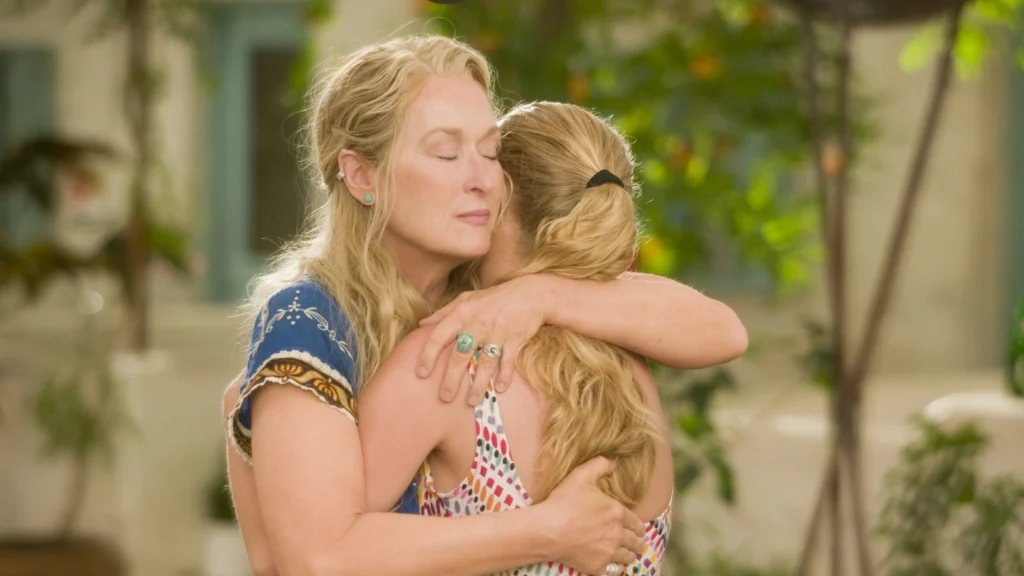
It wasn't the ending she feared. It was something else entirely.

Join the women who read theALLBRIGHT Editor’s Letter every week. Sharp, honest and always worth opening.
This summer, my son will graduate from university. It seems like two minutes since the summer three years ago that I was in IKEA buying him washing up bowls and dustpans (that he probably hasn’t got out of their packaging, even to this day!) ready for him leaving home and starting as a fresher.
I remember that summer as so bittersweet: a heady mix of huge excitement for what awaited him, along with this aching, pre-emptive grief for what I felt awaited me, which would surely be the gaping emptiness of empty-nest syndrome (such an awful phrase), loneliness and feelings of redundancy. Motherhood, I felt, was as good as over. I honestly feared depression.
During this summer of ‘letting go’ I re-found a poem I have always loved: ‘On Children’ by Kahlil Gibran. In it, Gibran reminds us:
“Your children are not your children”
“They come through you but not from you”
A great reminder that I don’t own my son and never did; he was not mine to ‘keep’ or ‘let go’ of...
My son is my only child. It was just him and me at home. You might say this made him leaving worse, but actually, I don’t think so. Many of my friends who are married and had one or more children still at home, were up to the same nonsense as I was: getting maudlin over baby pictures and wondering where those halcyon days of Christmas Fairs and playdates went.
As we thought about that ‘awful’ day we’d drop them off at university and wave goodbye, I started to hear the same phrases: “I am dreading it” we said. “I’m going to be a mess!” My friend P had done so much weeping beforehand that on the day, she found she did not shed a tear. I was similar.

Now, with my son almost through university, reporting through the other side, I can honestly say, I don’t feel how I thought I would. This stage of motherhood has not been what I feared.
On the contrary, I have found many things to love about it. Many beautiful gains I did not expect. It’s made me wonder: why all the language of loss and grief, then? And could we reframe it? Not to be a time of loss but one of growth and expansion? Not just in our role as a mother, but as a person?
I think a resounding ‘yes’, if we let it.
After all, when our children leave home, we do not lose our role as mothers, so much as get a promotion to another role. This is arguably more nuanced and profound. It’s not that your child doesn’t need you it’s that they need you in different ways – and these ways require different skills. I have found I am less director and fixer of his life, more steward, bystander, collaborator and guide.
On another point: if you ever wanted to be their friend but, like me, used the phrase ‘I am not your friend, I am your mother!” frequently, when making the point he doesn’t have to like you, then this is your moment! Now, that their lives really are their responsibility and you can’t actually tell them what to do, you slide – almost without noticing – into more of a friend role: you’re their champion, their comfort and their sounding board; the witness to their sadnesses and their joys. Helping them to navigate, instead of being navigator.
My friend L who is the mother of three young adult sons, and also happens to be a psychotherapist, reminded me when I was in the throes of my pre-emptive grief:
“The ‘letting go’ doesn’t happen all at once. It’s not a graduation. It happens in stages. We are letting go from the moment they are born; we give them to childminders, other members of our family, nursery and school.”
“I’ve never aspired to having kids who only had me in their world” she added. “It was never their job to complete me. Any issues I had about empty nest syndrome were about my feelings, not theirs, and possibly not wanting to face myself.
I can’t say I can attest to having been so philosophically healthy about my child leaving home, but since he did, I have definitely learned things:
Among them, humility and letting go – not just of him – but the need to control. I no longer know what’s ‘best’ for him like I had to when he was little, he does - and I have marvelled and been proud of the choices he has made. (and not loved some too but had to let that go!)
I have also learned (surprise) that he is NOT me. So, when I am trying to influence him on ideas about his future, his career, or even his health, it doesn’t really wash. “Mum you’re projecting again” he’ll say, when I say, “are you sure you want to be going to bed so late all the time, that would make me feel terrible!” He is mature enough to notice what’s going on, and what’s more to call me out on it.
Perhaps there is a reason why the time in our mothering lives that we ‘let go’ of our children and they leave home, is the time we let go of our parents as they age and finally die.
My friend C’s mother recently passed away after a short stay in a care home. In her final weeks, when her mum was often unconscious, C read to her from a book she herself had loved as a child.
“I found there was a real mirroring of the parent / child relationship in those last weeks, it was like the mothering skills I learned with my own children, came in useful with my mum. I become the nurturer and protector, whereas my daughter, became like a mum to me, comforting me in my own grief at losing my mum.”
Perhaps this is one of the joys about this stage of motherhood: watching them rise to adult challenges.
As Gibran says in his poem: “You may not make them like you, but aspire to be like them”
There’s real joy in that aspiring. In the admiration we find we have. I love my son’s level-headedness (not a quality I possess!) and his total lack of need to people-please.
“I love learning from their sports and technology skills” says L. “I love their lightness of touch with people and watching them explore. If I don’t let them out of my realm, how can they do that and therefore how can I learn from them?”
Let’s not forget that this is a stage of life that women don’t have to be defined just by motherhood anymore. We can rediscover ourselves. My friends are becoming artists and gardeners, nutritionists and singers.
“I don’t feel so much emotionally stretched” says my friend G. “As emotionally spacious. I have time to really think about any problems my daughter has, and the time to talk to her about them too.”
When writing this piece, I thought I’d take it from the horse’s mouth and asked my son what he needs in a mother at this stage in his life:
“Just to chill out a bit more” he said. “Stop with the hero complex and allow us our feelings. We just want to know you’re there, trusting we’re ok. Also, that we can come home if we’re ill or vulnerable which we can’t really be with our boy mates.”
This brought me perfectly to the last line of Gibran’s poem, ones I find so moving and helpful:
“You are the bows from which your children as living arrows are sent forth
The archer sees the mark upon the path of the infinite, and He bends you with His might that His arrows may go swift and far.
Let your bending in the archer’s hand be for gladness; For even as He loves the arrow that flies, so He loves also the bow that is stable.”
When I read that last line, it is a reminder to try and be that stable bow, so that he may fly far, and even possibly come back.


