
When CEOs Shout “Back to the Office”, Women Pay the Price

When CEOs Shout “Back to the Office”, Women Pay the Price
I quit. It was a rainy Monday morning after leaving my screaming baby at nursery and – like many mothers trying to play this exhausting game of snakes and corporate ladders – I hit breaking point.
I didn’t quit work because I wasn’t good at my job, I left because the job didn’t work for me.
I walked out when my flexible working request was denied because it would ‘open the floodgates to others seeking flexible working’. Every success I’ve had since with Flex Appeal – my campaign for flexible working for everyone – has been a direct tally of what that business lost in me as an employee. As an aside, I can safely say, there's truly no pain quite like being screwed over by people that you worked alongside – and thought of as friends.
After what felt like a shift in the right direction, right now, a new white noise is emanating from CEOs, as they holler: ‘everyone back to office’. Not only without any real understanding of who ‘everyone’ is, but dismissing the impact this mandate creates for so many employees, not least, the working mothers amongst us.
It’s like the titans of business – Lord Sugar and Sir Dyson leading the charge – are simply saying in 2026, ‘you can’t sit with us’ – to those with caring responsibilities and to anyone with disabilities. The result: many employees are being routinely driven out of the workforce in favour of old school presenteeism and a thirst for office bants.
One thing I’ve noticed is a new phenomenon I’m coining: the ‘LinkedIn effect’. Where bullish announcements are made on the platform about an urgent return to HQ, leaving employees who rely on flexibility shopping for employment elsewhere. Over a million UK workers have left a job in the last year due to a lack of flexible working.
But as these corporate behemoths brag about elusive water cooler moments, there’s a rising number of businesses using this archaic mindset to their advantage. In the shadows of these braying leaders are their savvier competitors, that are hunting for top-tier – often female, often mothers – talent swept, via these mandates, from influential boardroom tables.
It turns out, while the dinosaurs are roaring from their offices, demanding a return to desk culture, smart employers are harnessing talent with a free, easily-implemented solution: flexible working.
It’s no longer about 'allowing' mums to shuffle off for the school pick-up, it's about recognising that we aren't just lemmings in the workplace, we have lives outside of the office and families that we care about. Teenagers navigating overwhelm, illness emergencies, school performances. In the current climate all of these come with a huge slab of mum guilt – note that you never hear ‘dad guilt’ – but they shouldn't.
Because employment that moulds around real lives, is the humane approach to working that so many of us are clamouring for. In fact, a recent four-day week trial found that 39% of employees were less stressed, and 71% suffered a lower burnout number because of this flexible approach. This echoes 71% of women in the everywoman Future of Work Report 2026 saying flexible working has had a mostly positive impact on their career. Which goes to show that the ‘computer says no’ brigade aren’t basing decisions on what is best – but instead on how they believe it should be done. Finger in-the-sky leadership remains rife.
National charity, Kinship, which supports kinship carers raising the child of a relative or friend when they are unable to, is a great example of how to get flexible working right. Gemma Carroll, Associate Director of Communications, explains, ‘We have employees from all over the UK, which is brilliant as we have people that we wouldn’t be able to hire if we were just hiring in London. Because we work flexibly, we have staff members from the communities we serve, which just makes complete sense. We can also hire people with lived experience of kinship care - and that’s so important to our work and our mission.’
While the rallying cry of ‘back to the office’ is primarily deemed as being bottom-line led (arguably ego-led), there are no clear stats that point to employees being more productive when they are strapped to an MDF desk under office strip lighting.
The reverse, in fact is often closer to the truth. No question about it, flexible working is linked to higher employee loyalty and lower staff turnover. A whopping 61% of employers say that flexible working helps attract candidates, which means whichever way you look at it, this approach is a recruitment no-brainer.
Indeed, employees are now seeing flexible working as a key factor in career decisions – sometimes ranked more highly than pay increases. The pandemic had a big role to play – Pandora’s Box was opened – and flexible working really showed its worth. As a result, many people made big lifestyle changes by moving out of the city or changing childcare options, which means they are less likely to make a move back to HQ. Even if they’re perfect for the position.
We know the scales have tipped, people want to be treated as humans, to work in a way that works with their needs and for those they love. And if businesses want to access that top talent, offering flexible working isn’t a little bonus ball or fluffy extra. It’s not the equivalent of a Fitness First 15% discounted membership. It’s a seismic pull, a fundamental incentive for the best people in the industry to build the future of business. The anti-LinkedIn effect, if you will.
Really, this is a question of inclusivity. Not least towards parents; for the mothers who can’t find nurseries that remain open beyond 6pm, and the fathers who want to be at the school gates and not just play into the hapless Dad trope of a Mad Men 1950s era.
No, mothers do not ‘want it all’, but good God, are we doing it all – hello, domestic load – and it’s time that businesses whimpering about their gender pay gap get with the wider equality programme.
Don’t just take it from me. The Equality and Human Rights Commission has said the flexible working is the ‘primary way’ to close the gender pay gap. What I am saying – and fighting for people (yes, that’s everyone) is to get what they really want from work: the ability to do a great job and have time with their people. Time to look after themselves. Not wasted time embedded in someone’s armpit on the morning commute.
Flex Appeal, indeed.
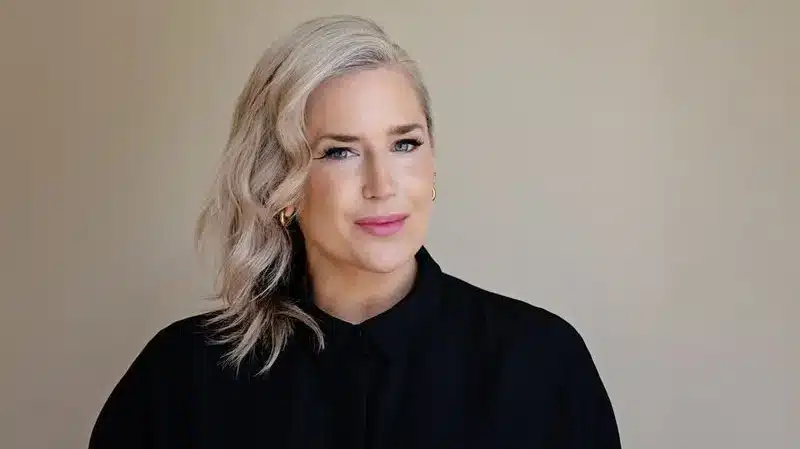
Anna Whitehouse is a journalist, broadcaster and author, with a focus on flexible working and maternity discrimination, via her decade-long campaign Flex Appeal. She’s a mother and stepmother to five children and speaks openly about blending her big/little family. Anna is also the new Editorial Lead of AllBright’s Motherhood Works campaign, as well as a speaker at our upcoming Step Forward summit, in celebration of International Women’s Day 2026.
If this piece resonated, join AllBright’s Motherhood Works Summit this June in partnership with Mindplace (part of Bupa) to explore the powerful transformations that motherhood sparks, and how it redefines success, reshapes ambition, and helps to clarify what comes next.
Bupa believes in a world where caring for your mental health, especially for mothers, carries no stigma. Where talking to a therapist is as accepted as going to the gym or visiting the doctor. That’s why they’ve created Mindplace, a global network of wellbeing centres, to make caring for your mental health as easy and stigma free as possible.
What to read next


