theALLBRIGHT
Advertisement
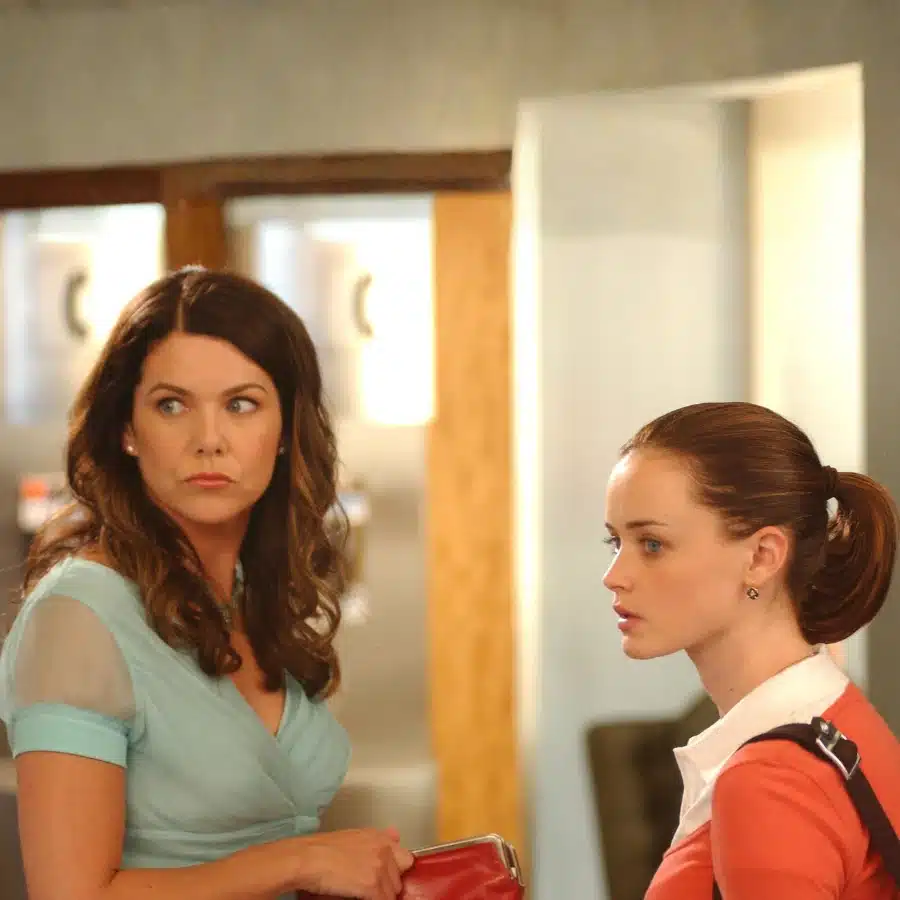
Lorelai and Rory Gilmore in Gilmore Girls: the mother-daughter dynamic that rewrote the rulebook around the daughter often, gently, knowing best
Photo by Warner Bros Tv/Kobal/Shutterstock

The Parenting Expert in My House Is My Daughter

She's An Adult Now; I'm Still Taking Notes

Jo Elvin spent 18 years editing British Glamour, telling women how to feel good about their bodies and do life right. Ironically, the person who knew the real truths was her young daughter at home, waiting to be heard. Here is a personal essay from Jo on the lessons only a child can teach you, and why the woman who knew exactly what to say to millions of readers got it more than a bit wrong with her own child.

Join the women who read theALLBRIGHT Editor’s Letter every week. Sharp, honest and always worth opening.

One sunny Saturday afternoon, my husband, our three-year-old daughter and I were driving home from the park. It was one of those pleasant but unremarkable moments, until she went and made it one of the most profound of my life. 

Ironically, around this same time, several years before the TikTok trend or a Gen Z vocabulary for it, there was Rory Gilmore. The daughter who navigated life, literature and her mother's beautiful chaos with equal composure, while Lorelai remained gloriously, lovably all over the place. Television's most famous example of a daughter doing the noble, unglamorous work of keeping things together. Most of us laughed. Some of us recognised ourselves in Lorelai.

As it turns out, this wasn’t far from my own parenting truth 

So back to the car. I'd caught a glimpse of myself in the wing mirror and made some throwaway comment about having a 'bad hair day'. My gaze went back to my phone. After a few seconds of silence, Evie piped up from her car seat, “Mummy, you're always horrible stuff about yourself like, 'My make-up looks bad today' or 'I don't like my hair'.” 

I was stunned. Was I always saying stuff like that? My husband side-eyed me, smirking. Wow. Letting my inner Mean Girl take the mic hadn't been my intention, but there's really no point arguing with the sharp eyes, big ears and no filter of a toddler. That wasn't a little blob of a baby back there in the car seat anymore, but an actual human, sentient and terrifyingly observant. 

For crying out loud, you're supposed to be a feminist, I scolded myself. My generation was supposed to be more enlightened about the damage to be done in harping on about our bodies and all their 'flaws'. We must teach our girls that appearance does not matter. Right? It was my first vivid memory of my daughter teaching me how to be a better parent. It would not be my last. 

“The right parenting advice changes constantly because the child keeps changing. Always listen, but also be on your guard for what they're not telling you.”

When she was nine, and I was the editor of Glamour magazine, I'd been travelling a lot for work. After spending another month running around Paris, Milan and New York for the fashion shows, I apologised to her for having been so absent. 

She held my gaze for a few moments before saying, calmly, firmly, ‘Mum. I don't want to be rude, but… I can't think of different things to talk to you about, every single day. When we have time apart, we get new things to tell each other.'  

Wow. While slightly wounded that I was clearly not as missed as I'd supposed, I was impressed with this take. In her little girl way, she'd made me see that my 'working mum guilt' was my issue, not hers. And I let myself have a moment to feel proud that I'd raised a kid who still felt secure in my love even if I was on the other side of the Atlantic. 

Over time, I got to feeling smug that my daughter had a knack of giving me the instruction manual required to be exactly the parent she needed. Until reality delivered me quite a punch. Because here's a couple of parenting lessons I've learned the brutal way: one, the right parenting advice changes constantly because the child keeps changing. And two, always listen yes, but also be on your guard for what they're not telling you. 

I learned all this in one shocking afternoon via a phone call with her school counsellor. She wanted me to know she'd had a chat with my daughter about body image. Apparently, she'd been feeling a bit low about her developing body, nothing unusual in that for a teen, and was reluctant to talk to me about it. Why? Because she believed that because I never discussed my body, I wouldn't understand that she was feeling cripplingly self-conscious about hers. Even worse, her logic was that I'd be angry with her for having any body anxieties, because as far as she could tell, I believed being down on our bodies is a terrible, shameful thing. 

I thanked the counsellor for telling me this, all the while in my head silently screaming, 'FOR FUCKS SAKE, I CANNOT WIN'. 

“You don't have to perform confidence or certainty to be a good parent. Sometimes it's just about being willing to be fallibly human in front of your child. ”

I'd taken my three-year-old's advice so seriously that I never spoke about my appearance again. I swallowed down on my own hatred of wearing a bikini in public and led by example. I praised my daughter's body for what it could do, rather than how it looked. I never ever discussed diets and certainly not food being 'good' or 'bad' or 'a guilty pleasure'. What an exemplary mother, feminist, body-positive role model I was. And I had unwittingly created an environment where my own daughter was too scared to talk to me about the very human challenge of being comfortable in one's own skin. 

I'd forgotten that the three-year-old who told me to pipe down with the negative self-talk was gone. She was now the teenager who needed to be reassured that everyone wrestles with this stuff. 

So, not only is it impossible to get everything right, even when you have indeed once upon a time been told by your child what the right thing to do is, but your child will wake up one day and find that the right thing is now the absolute wrong and worst thing that you could have been doing all along. 

I hope that clears everything up. 

Seriously though, in this great never-ending minefield of Doing Parenting Right, I'll tell you the one piece of advice I learned that I still lean on, to this very day. I can't remember where I read it. Probably in one of the bajillion parental guide books I clung to in those first few newborn weeks, before their blancmange of conflicting, contradictory and anxiety-fuelling 'wisdom' had me chucking them all in the bin. Swearing and crying as I did.  

But one sentence stayed with me: 'Parent the child you have.' 

It sounds deceptively banal but I find it at once useful and reassuring, even now that my daughter is nearly 21. Stop. Breathe. Listen. Don't react. Don't wish you weren't having this issue and accept you are. In those moments, I do my best to remember the advice to parent the child in front of me. Not the one I imagined I would have, or the one from five years ago. This one. 

It stops me wishing the problem away and just being present for her. It reminds me that I don't always have to immediately arrive at answers. Sometimes the best thing I can do is listen, maybe even admit I don't know what to do right now. Letting her see that I'm still learning too. 

You don't have to perform confidence or certainty to be a good parent. Sometimes it's just about being willing to be fallibly human in front of your child. 

Jo Elvin will be taking to the stage at theALLBRIGHT's Motherhood Works Summit in partnership with Mindplace (part of Bupa) to continue this conversation. If her piece resonated, come and hear her in person, alognside a full day of panels, workshops and honest discussions about what motherhood really unlocks in women.
Mindplace believes that mental health care should carry no more stigma than a visit to the gym which sits at the heart of everything Motherhood Works stands for.
Tickets are available now. Join us.
Advertisement
Advertisement