
I’ve Sat with the Shame of My Worst Moments as a Mother


I’ve Sat with the Shame of My Worst Moments as a Mother
There is a version of composure that looks like never losing it, a version of love that sounds like a voice of endless patience even when life is loud, someone is whining and the dinner is burning. We have been sold these versions of motherhood for a long time, and many of us, myself included, bought it outright.
Real, lived-in motherhood challenges this fantasy in its gritty, truthful nature. When we fall short, we don't question the bar we’re aiming for. Instead, we question ourselves, our integrity, and our love. We decide that we are the problem. That if we could be more patient, regulated and in control, we wouldn't snap or rage. Nor would we lie awake replaying the look on our child's face, promising to try harder tomorrow.
But what if the bar is flawed, not our love? What if the fantasy is the issue, not our personality? What if the version of motherhood we’ve been sold wasn't designed with our humanity in mind?
Throughout my younger years, I fought tooth and nail to be the ‘good girl’. And then I yearned to be the calm archetypal mother. I learned early that being agreeable was how you kept the peace and earned your place. I believed my furious self-sufficiency was a gift to those who loved me. I tried not to burden others with my needs. I carried that blueprint into my work, my relationships, my mothering. I believed that controlled composure was the same thing as strength.
But even amidst the Trying. So. Hard, I snapped. Repeatedly. I lost my calm at the very people I loved most. And what followed was hot, consuming shame.
Motherhood in all its fullness and demands strips you of the capacity to perform calm. You no longer have the headspace to monitor how you look or manage how you come across. The composed, curated version of yourself simply can’t survive the noise and need of it all.
In that loss, if you look for it, there is a gift.
You start to trust yourself in ways you never did when you had time to overthink. Your instincts sharpen, your emotions deepen and feel louder. That is not falling apart as we may first believe, it’s the most honest version of you, unmasked and asking to be heard.
Things changed for me when I realised that my snapping and raging was not evidence of my failure, but a source of information. My nervous system, finally too full of holding everything and everyone, communicating in the only language it had left. In the spilling up and over, I was being pointed, with some urgency, back to myself.
Anger points not to maternal failure, but to a boundary crossed, a need unmet, a self that has been overridden too many times. The problem is not that we feel angry, it is that we have been trained, from girlhood, to suppress it as an ugly flaw, rather than listen to it. And so we suppress and smooth and hold ourselves together, until something mundane and seemingly insignificant tips us over the edge we hadn’t noticed we’d been teetering on.
When we stop forcing composure and start treating our reactions as useful data, something changes. The irritation before the school run is a signal that something feels too much or too loud. The rage on an ordinary Tuesday evening is a body running on empty asking for softness and rest.
Getting it wrong with your children and repairing the relationship builds a different kind of resilience than never losing your composure in the first place. I have sat with the shame of my worst moments as a mother, the raised voice and sharp words that felt like a release for a second before I would have given anything to undo them. And I have had to learn to believe that the messy moment is not the whole truth about who I am.
Repair is where real confidence is forged. Not the confidence that says "I never get it wrong." The confidence that says: "I got that wrong, I know what I needed. I am going to name it, repair this, and do it differently." Earned in the humbling, essential work of coming back after rupture. Of taking responsibility, apologising, and then turning towards the unmet need that started it all.
The moment you snapped was not the moment you failed. It was the moment your body said “Enough. I have been holding this for too long. Listen to me”. That is not failure, it’s the beginning of something more authentic, more sustainable, more you. Confidence that doesn't need you to be perfect, but makes space for your humanness.
3 Ways to Find Your Route Back
In the moment of overwhelm: Name it to yourself before it erupts. "I am really struggling right now" creates a gap between the feeling and the reaction. Then buy yourself ten seconds: walk out if appropriate, splash cold water on your face, voice note a friend. You are not trying to override the feeling; you are trying to stop it coming out sideways.
After the shout: Resist the shame spiral. It raises the pressure and makes the next snap more likely. Repair simply: "I lost it, I am sorry, I was overwhelmed and that is not your fault" is enough. Then turn towards yourself and get curious. What were you carrying, what hadn’t been shared or spoken? The snap is never only about the spilled cup. Extend to yourself the compassion you would offer your child after a meltdown. They needed understanding, not punishment, and so do you.
Why this transfers beyond the home: The confidence that gets built in the unglamorous work of rupture and repair, doesn’t stay in the home, you take it into the spaces that used to feel intimidating. Into the work conversations where you would once have stayed silent, into the friendships you are building on more authentic foundations.
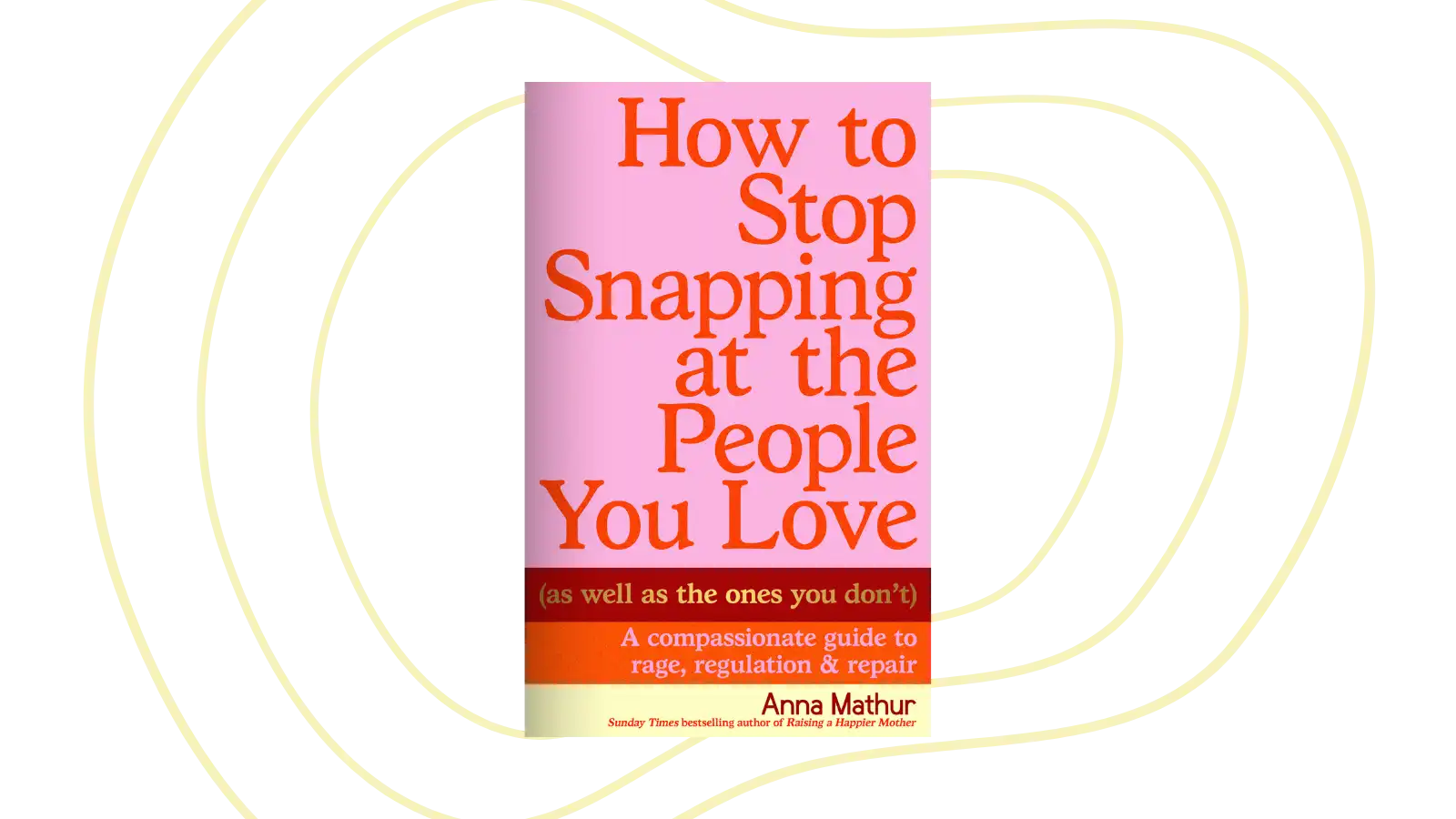
Anna Mathur is a psychotherapist and author. Her new book, How to Stop Snapping at the People You Love, is available for pre-order now (Penguin Life, 2nd July 2026).
Anna Mathur will be taking to the stage at theALLBRIGHT's Motherhood Works Summit in partnership with Mindplace (part of Bupa) to continue this conversation. If her piece resonated, come and hear her in person, alognside a full day of panels, workshops and honest discussions about what motherhood really unlocks in women.
Mindplace believes that mental health care should carry no more stigma than a visit to the gym which sits at the heart of everything Motherhood Works stands for.
Tickets are available now. Join us.
What to read next


