
Advertisement


The Ultimate Food Lover's Guide to Puerto Rico
In a culture defined by constant connectivity, true restoration is rarely about doing less. It is about experiencing more. In partnership with Discover Puerto Rico, we explore why the Island’s farm to table movement, female led kitchens and immersive food culture make it an unexpectedly powerful reset for modern working women.
The modern working world has perfected one thing: proximity. We are always within reach of our inbox, our teams, our targets. The language of productivity has seeped into evenings, weekends and even holidays. We optimise, we streamline, we automate. What we rarely do is fully disengage.
Rest, for ambitious women, is not passive. It is sensory. It is immersive. It is the deliberate act of stepping into a place where time is measured not by notifications but by flavour, rhythm and light. Puerto Rico, an archipelago in the Caribbean Sea, offers precisely that recalibration.
Over the past three decades, the Island has undergone a quiet culinary transformation. What began as necessity has evolved into identity. After the devastating hurricanes of 2017 disrupted supply chains, chefs and producers were forced to rethink sourcing. The result was not scarcity but innovation. A renewed commitment to local agriculture, agroecology and farm to table practices reshaped the food landscape with long term sustainability in mind.
Today, that shift is visible everywhere. At Bacoa Finca y Fogón in Juncos, chef Xavier Pacheco has become synonymous with modern Puerto Rican farm to table cooking. His menus are rooted in heritage, shaped by childhood memory and executed with contemporary precision. In the mountains of Cidra at Aldeana, and at taquería Los Guapos in San Juan, the same philosophy prevails: ingredients first, culture always.
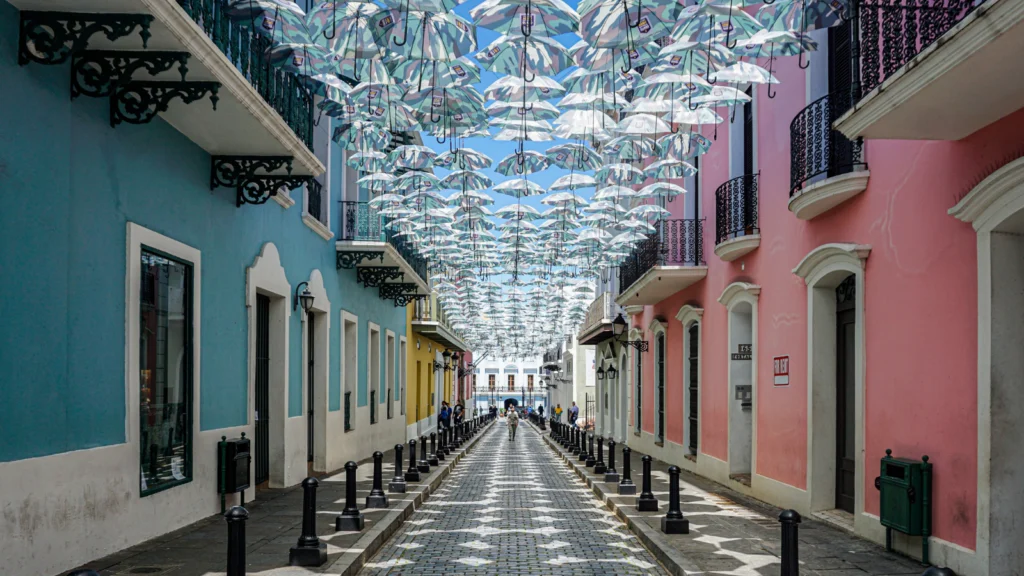
In Old San Juan, Verde Mesa, the city’s first farm to table restaurant, set the tone early. Female owned and housed in a historic building filled with antique furniture and art, it signalled that sustainability and elegance were not mutually exclusive. Its menus, inclusive of vegan and vegetarian diners, reflect a broader evolution across the Island.
Chef Loumiry Sanchez has witnessed that change firsthand. A vegan restaurateur and advocate, she recalls a time less than a decade ago when diners were unfamiliar with the term. Education became part of the service. Today, most restaurants, hotels and bars offer plant based options as standard. Cultural shifts rarely happen overnight, but Puerto Rico’s culinary scene demonstrates how quickly attitudes can evolve when curiosity is met with craft.
For travellers seeking more than a reservation, the Island offers immersion. Family run farms such as Finca La Zafra invite guests into the full harvest to table cycle. Visitors walk the land, learn about agroecological practices, harvest produce and cook alongside chefs before sitting down to a meal shaped by the morning’s work. It is experiential in the truest sense. You leave not only full, but informed.
At Frutos del Guacabo, a similar ethos prevails. Education and nourishment are intertwined, offering an antidote to screen heavy professional lives. In a world of abstraction, there is something grounding about seeing exactly where your food begins.
Puerto Rico’s fine dining scene adds another layer. At 1919 Restaurant inside the Condado Vanderbilt hotel, Michelin starred chef Juan José Cuevas builds menus that champion local producers while delivering global technique. The experience is refined but never detached from place. Cocina Abierta, translating to open kitchen, approaches dining as cultural storytelling, guiding guests through the influences that have shaped Puerto Rican cuisine over centuries.
Yet some of the most memorable moments unfold beyond white tablecloths. In Piñones, often described as the soul of the Island, Afro Caribbean street food stalls line the coastline. Alcapurrias, bacalaítos and pinchos are served steps from the sea. The atmosphere is unpolished, joyful and deeply rooted in community. A drive from Loíza along the coast becomes as much a sensory experience as a culinary one.
Further east, Luquillo pairs beachside views with over sixty kiosks known as chinchorros, where music spills onto the sand and plates are shared generously. To the west, in Isabela and Rincón, sunsets provide a different kind of indulgence. Sanchez describes them as magical, places where energy renews and perspective returns. The rhythm slows, but the flavour remains vivid.
No exploration of Puerto Rico’s food culture would be complete without rum. The Island is the largest producer of premium rum in the world, and distilleries such as Casa Bacardí, often referred to as the Cathedral of Rum, and the Castillo Serrallés Museum offer insight into centuries of craft. Tasting here is not simply about cocktails. It is about heritage, industry and the artistry of distillation.
For the ambitious traveller, the appeal of Puerto Rico lies in its balance. It is sophisticated without being performative, rooted without being static. Its culinary scene reflects resilience, creativity and a commitment to local enterprise that feels aligned with the values many modern women hold in their own professional lives.
Switching off does not require disappearance. It requires intention. In Puerto Rico, restoration arrives through texture and taste, through conversations with chefs and farmers, through long lunches that stretch into golden hour. It is a reminder that ambition is sustained not only by drive, but by delight.
To explore more and begin planning a culinary escape shaped by culture, sustainability and flavour, Discover Puerto Rico offers detailed guides and itineraries to help you design a trip that nourishes far beyond the plate.
What to read next


