
What Happens to Women in America Doesn't Stay in America

What Happens to Women in America Doesn't Stay in America
This story isn’t just about the women of America. It never was. The overturning of Roe v. Wade in 2022 ended nearly fifty years of constitutional protection for abortion, prompting a rollback of reproductive rights across the United States. But decisions made by a global superpower have impact far beyond its borders. U.S. political messaging, ideological shifts, and language directly shape the agendas of institutions and movements worldwide. From Poland to South Korea, Australia to the United Kingdom, what started as a domestic crisis has become a driving force for widespread change.
In his early presidency, Trump reinstated and expanded the Global Gag Rule, removing U.S. foreign aid from international programmes addressing abortion, and withdrew funding from the United Nations Population Fund. These actions impacted reproductive health services in more than sixty countries, many of them dependent on international aid.
The result: clinic closures, restricted contraception, and rising risks of unintended pregnancies and maternal mortality. What is more, reproductive autonomy and economic equality are directly linked. Without control over reproductive choices, women face disadvantages in workforce participation, earning potential and financial independence. Policies that undermine women’s autonomy, health and economic security effectively reinforce structural gender inequality across workplaces and health systems worldwide.
Policy isn’t the only concern. It’s the cultural beliefs that travel alongside it. Conservative Christianity has become deeply intertwined with Republican politics, with Christian nationalist language being used to integrate systemic sexism into actual policy. It provides an ideological scaffolding that frames women’s empowerment as immoral, ungodly, and by extension, un-American. When misogynistic narratives become embedded in political culture, they do more than shape rhetoric or practice - they determine who is believed, who is protected, and who is allowed to escape accountability.
The language underpinning this worldview creates a system in which abuses of power are minimised, excused or quietly ignored. It’s a perspective that has moved remarkably easily across borders, a phenomenon scholars increasingly describe as ‘the transnationalisation of culture wars’. From 2016 onwards we saw these beliefs shape the vernacular of antagonists such as Jordan Peterson, Andrew Tate and the late Charlie Kirk. Their views helped legitimise the MAGA culture of toxic masculinity.
They support a social and political system in which male dominance is natural and female autonomy is contemptible. These beliefs are amplified through a growing ecosystem of anti-“gender ideology” campaigns, anti-abortion activism and online platforms.
Versions of this rhetoric are now visible well beyond the United States.
The rapid rise of ‘masculinity influencers’ is hard to ignore. Louis Theroux’s recent documentary Inside the Manosphere shows how content can escalate from fitness advice into increasingly extreme views on women and relationships. In a world of shifting gender norms, the appeal is easy – if worrying – to understand. Rising rates of isolation, loneliness and economic instability among young men have created a demand for spaces where they can openly discuss mental health, dating and fatherhood. But in reshaping contemporary ideas of masculinity, the rhetoric quickly becomes anti-feminist, homophobic, antisemitic and racist.
For these influencers, it's profitable. The "alpha male" pipeline is a business model as much as an ideology, monetising insecurity through paid courses and premium platforms.
And it isn’t just Andrew Tate and friends who are giving weight to this trend. Leaders such as Viktor Orbán in Hungary and Giorgia Meloni in Italy frame feminism and LGBTQ rights as threats to faith, family and national identity. In South Korea, anti-feminist mobilisation among younger male voters has become a powerful political force. And in Poland, one of Europe’s most restrictive abortion regimes emerged after years of campaigning supported by U.S. anti-abortion networks. At the same time, in the United Kingdom and Australia, teachers and researchers have increasingly reported teenage boys repeating the language of the online manosphere in classrooms.
Make no mistake, this isn’t just a collection of disgruntled males; it’s a movement with funding, audiences, and ideology. It’s a distributed political recruitment infrastructure with proven electoral value. Across the US, UK and Europe, politicians have actively courted it and been rewarded with votes.
It becomes an engine of political change driving towards the restoration of male dominance as political common sense.
So, if patriarchy operates as a political system, resistance must be organised. As pioneering feminist activist, the late bell hooks argued in 2017, “We have to restore feminism as a political movement. The challenge to patriarchy is political, and not a lifestyle or identity.”
As with so many vital movements, organised resistance works best when institutional and grassroots energy move together.
Jennifer Rubin's 2021 book Resistance documents how women across the United States built a collective response to Trump's presidency, powered by two interconnected forces: institutional leaders who channelled public outrage into political action, and grassroots organisers who mobilised ordinary women to sustain momentum. That architecture is not unique to America. And it is proven to work.
Globally, women have responded to threats to rights by combining institutional pressure and grassroots activism.
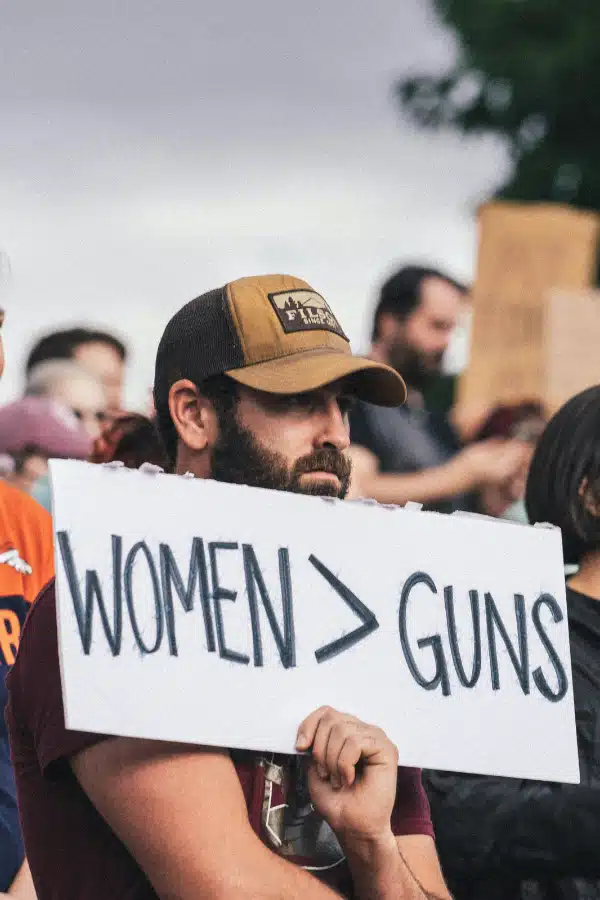
From mass protests in Poland to feminist movements in South Korea and expanding networks in the UK and Australia, resistance to the rollback of women's rights has become transnational; both backlash and resistance are increasingly global. This is an empowering message. It shows us how small actions can contribute to building a powerful collective.
This isn’t about arduous demonstrations or constant outrage but about sustainable, focused activism in which everyone can make a difference. You may already be informed, engaged, and active, but if not, the first step is simply education.
There is a rich body of feminist writing to draw from. Chimamanda Ngozi Adichie’s We Should All Be Feminists (2014) offers a short and accessible entry point. Or for those interested in the deeper intellectual foundations of feminist thought, bell hooks’ Feminist Theory: From Margin to Centre (1984), widely considered one of the most complete articulations of feminist politics.
Effective action doesn't require heroics, just consistency.
That means voting and defending democratic systems, supporting credible women's rights organisations like UN Women, Global Fund for Women or Equality Now, and focusing locally as well as nationally. It means backing representatives committed to ethical governance, strengthening independent journalism and resisting misinformation.
When rights are threatened across borders, it means amplifying international organisations, contacting elected representatives to apply diplomatic pressure, and participating in solidarity efforts. Small actions, sustained collectively, create lasting institutional power.
The rollback of women's rights is not accidental. It is strategic, coordinated, and transnational.
The regression is visible in law, language and culture, and it is increasingly global. The forces that closed clinics worldwide are the same that put Jordan Peterson on teenage boys' phones, and gave Orbán a political playbook. The infrastructure exists, the intention is clear and the momentum is real. The response must match that by being just as deliberate, organised, and sustained. Solidarity and resistance are essential tools in a political struggle, with political stakes, that belongs to us all.
Further reading:
Roxane Gay’s Bad Feminist (2014) approaches feminism with honesty and wit.
Jennifer Rubin’s Resistance: How Women Saved Democracy from Donald Trump (2021) examines the political mobilisation of women in recent American history.
Audre Lorde’s Sister Outsider (1984), essential essays on race, gender and power.
Angela Davis’s Women, Race and Class (1981), an unflinching account of who gets left out of women's liberation and why.
What to read next


