Advertisement

The Government is Protecting Teenagers from Social Media, Who’s Looking After Us?

By Edwina Ings-Chambers
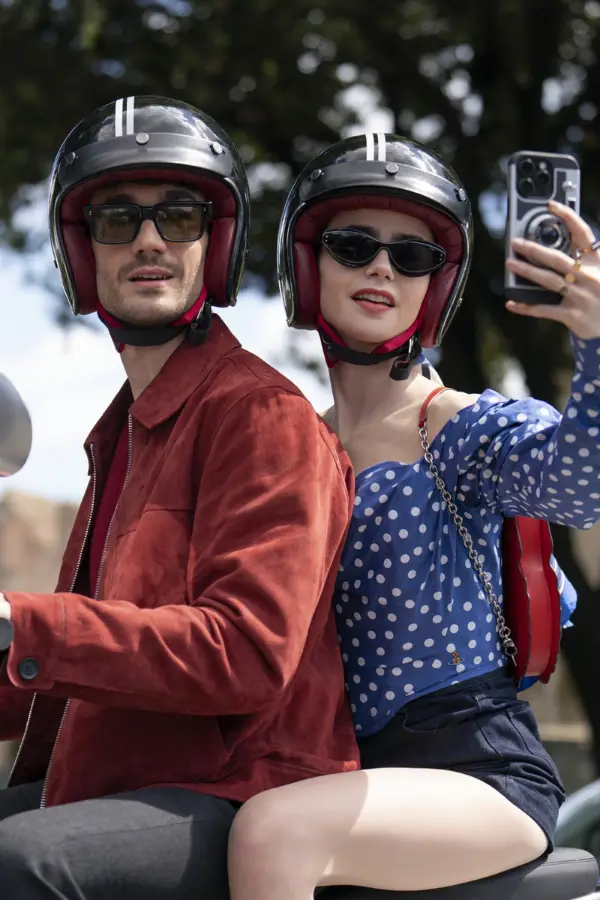
Even on a scooter in Rome, Emily's phone comes first. Sound familiar? A cautionary tale in polka dots
Photo by Netflix/Everett/Shutterstock
By Edwina Ings-Chambers

The Government is Protecting Teenagers from Social Media, Who’s Looking After Us?

We Need Help Too
Britain is banning under 16s from social media and calling it a victory. Here Edwina Ings-Chambers talks about the adults nobody thought to protect, what the algorithm is doing to our brains, our confidence and our grip on reality, and why the most radical act available to us right now might simply be putting the phone down.

By this time next year, unless the government has had a change of heart, a social media ban for under 16s will be in place in this country. The government's own press release declared in its headline that the move would 'give kids their childhood back'. A bold claim, especially given that research from Australia that tracked the result of similar legislation over its first three months found that 61% of 12-15-year-olds had found ways to circumvent the restrictions and were happily still scrolling their childhoods away. Veni, vidi, swipe up. 

Of course, I'm entirely in favour of protecting the wellbeing, safety, and prefrontal cortex development of children the world over. But in all of the conversations around the topic I always find myself thinking: but who's minding the adults? Who's giving them their adulthood back? Because the truth is that the worst offenders of social media and smartphone addiction that I've come across are older people, not teens and tweens, most of whom, at least in my life, are constantly challenging me to games of Monopoly, Scrabble, Cluedo, Trumps and chess, all played on real life boards. Increasingly it's adults that need help. 

Emily in Paris built an entire career, social life and romantic existence through her phone. We laughed along. Perhaps we should have been paying more attention to what that said about us. 

“Age really is just a number: it doesn't matter how old you are, social media can cause anxiety, loneliness, isolation, depression and sleep disruption in all of us.”

By many accounts, social media addiction in older people is on the rise. It can be driven by loneliness, too much free time in retirement, or simply being as engulfed by the algorithm as teenagers are. But where the prefrontal cortex is still developing in the young, in older people, changes in the same grey matter can make it harder for the brain to resist the compulsiveness of it all. Age really is just a number: it doesn't matter how old you are, social media can cause anxiety, loneliness, isolation, depression and sleep disruption in all of us. Even Pandora Sykes, the author, journalist and podcaster with 316k followers on Instagram, recently told The Observer that "Instagram makes me feel like I'm on acid at a circus. I last looked at it about a week ago but sensory hypersensitivity means I can't keep it on my phone".

I've witnessed its effect on friends of mine. One, who is 70, is constantly on social media yet derives barely any joy from it. Rather, the discovery feed that Instagram serves up, much of which is political and woefully untrue, seems to make her angry and leave her feeling powerless and resentful. A little fact-checking from other sources could help put things in perspective but she's too sucked down an Alice-like scroll hole and a world of distortion that she's convinced it's real. 

Another friend in her forties deleted the same app because comparing herself to others made her feel like a failure and a bad mother (she's the opposite). I, too, can find social media to be an emotional battlefield but need to stay on it for work. On good days it's a great source of information and a way to stay in the loop. On my less sprightly days it can feel like being engulfed by an out-of-control forest fire that burns my confidence to the ground. I've learned to be better at stepping away when I need to. 

“These platforms don't just take our time, they shape our perception of ourselves and the world around us.”

A recent World Happiness Report by the Wellbeing Research Centre at Oxford University bears out my thinking. "If you use social media for an hour a day, that's great, you're being connected," said Michael Plant, research fellow at the centre. "But the report did show a correlation between the more time you spend on social media and the greater loss of wellbeing." 

"The psychological toll can be significant because these platforms don't just take our time, they shape our perception of ourselves and the world around us," explains Jodie Cariss, therapist, author and founder of Self Space. "The more time we spend scrolling, the more our brains become trained to seek stimulation, novelty and certainty. We ask the questions and look for the answers in the same place, whereas in the past we'd have relied on multiple sources. At the same time, we're being fed a constant stream of curated success, outrage, fear and opinion, which means we have less need to question our own selves, to intuit and to go inside for the answers." 

So how can we be smarter about using our smartphones? Set daily time limits, though they are easy to override. Or try Brick, a device that makes blocking app distractions easier and unblocking them more deliberate. Cariss has three practical starting points: ask yourself before opening an app what you are there to do, and if you have done it, leave. Notice how different apps make you feel. Some educate and connect while others consistently leave you feeling behind or not enough. And remember that curating your feed is not avoidance; it's good mental maintenance. 

Even Emily, eventually, had to look up from her phone. The rest of us might want to consider doing the same before someone passes legislation to make us. 

"The healthiest relationship with technology is one where we're consciously choosing how it fits into our lives, rather than allowing an algorithm to dictate how we think, feel and see ourselves," says Cariss. "Ultimately, the goal isn't to stop using social media, it's to stop allowing it to use us." 

The algorithm is designed to keep you scrolling. Live Well, theAllBright's annual festival, is designed to help you look up, exploring what it actually means to feel well, in your body, your mind and your relationships, without a tracker telling you whether you're doing it right. Click and book your tickets below.

Advertisement
Advertisement
theALLBRIGHT

Get theALLBRIGHT edit – a curated selection of ideas, stories and opportunities shaping modern work and life.

Get the edit
We occasionally partner with brands we think you'll genuinely find useful or interesting. Would you be happy to hear from them too?