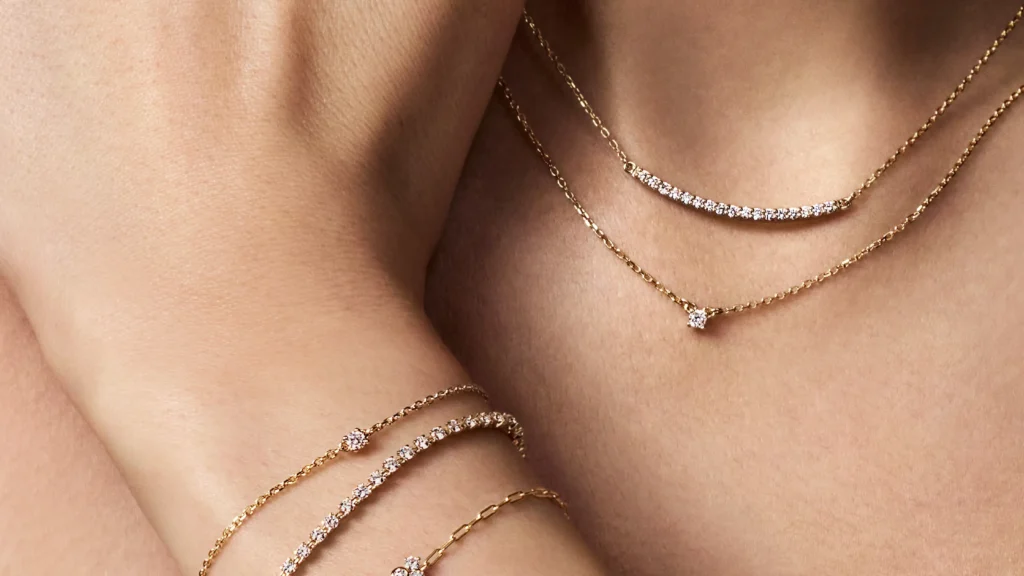
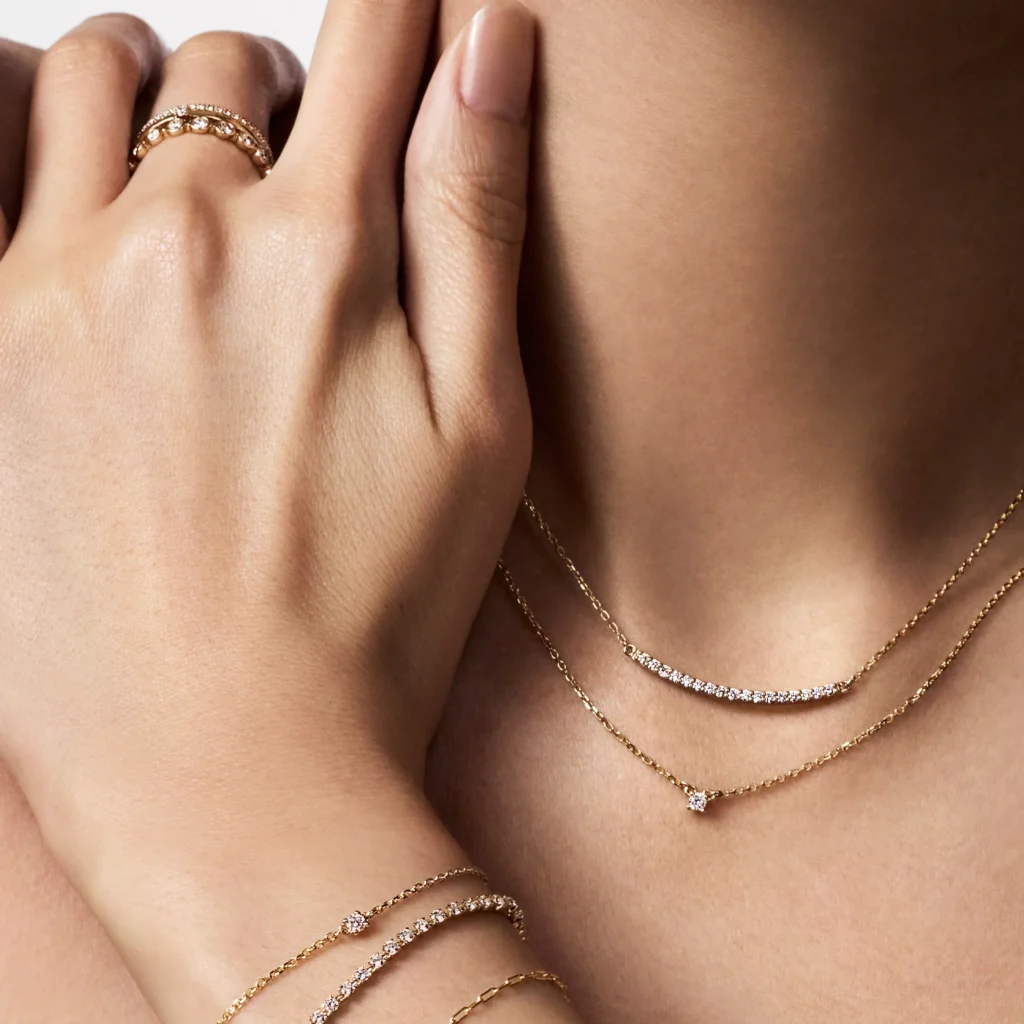
Sustainability in fashion has become a crowded conversation, but jewellery tends to sit slightly outside it, treated as a separate category when its environmental and ethical implications are just as significant. The precious materials industry has a long record of human rights concerns, opaque supply chains and environmental damage. Understanding that record is the starting point for making better choices.
The most impactful shift in recent years has been the move towards recycled metals. Pandora, for instance, now crafts every piece using 100% recycled silver and gold rather than newly mined material, avoiding an estimated 58,000 tonnes of CO2 annually. To put that in context, that is the equivalent of the emissions from the annual electricity use of 11,000 homes. It is a significant illustration of what material sourcing decisions can mean at scale, and a useful benchmark when assessing other brands.
The principle extends to lab-grown diamonds, which have become considerably more accessible in recent years and represent one of the more straightforward sustainable choices available. Lab-grown diamonds are chemically, physically and visually identical to mined diamonds. The difference is entirely in how they are produced. Pandora's lab-grown diamonds have been grown, cut and polished using 100% renewable energy since 2022, and set in recycled silver and gold. For anyone building a collection with longevity and ethics in mind, they are worth serious consideration.
Beyond materials, the most durable sustainable choice in jewellery is the same as it is in clothing: buy less, buy better, and buy pieces you will actually wear for years. The logic of the capsule wardrobe applies equally to accessories. A small number of well-chosen, timeless pieces will serve you better, and cost the planet less, than a rotating selection of trend-driven items. Overconsumption is the industry's most significant problem, and the most effective individual response to it is restraint rather than simply switching to a greener brand and buying at the same rate.
Supply chain transparency is the third area worth scrutinising. Knowing where your jewellery comes from, who made it, and under what conditions, is not always easy to establish, but brands that are genuinely committed to ethical sourcing tend to be open about it. Pandora publishes its supply chain commitments and has structured partnerships, including a longstanding collaboration with UNICEF that has supported access to education for over 1.2 million children globally, around the same principles of accountability and impact.
The choices are not always simple and the most sustainable option is not always the most accessible one financially. But the direction of travel in the industry is clear, and the brands leading it are making it increasingly possible to build a collection that reflects both your taste and your values. Starting with the question of where something comes from, and what it is made of, is as good a place as any.
Explore Pandora's sustainability commitments at pandora.net.